


Picture this: a warm evening on the ramparts, the smell of grilled fish drifting from the old port, families lingering over ice cream near the Picasso museum, teenagers laughing on the beach past sundown. That image, more than any statistic, is what most people mean when they ask about safety in a French coastal town. But behind the postcard, you want facts. If you are considering buying your French home in Antibes, or spending a few weeks scouting the area, the real question is simple: is Antibes safe enough for you, your family, and the life you want to build here?
The short answer is yes, with the usual caveats of any Mediterranean city that welcomes millions of visitors each year. The longer answer deserves clarity, because “safe” means very different things to a solo traveler, a woman walking home at night, and a family choosing a school neighborhood.
Is Antibes safe? The general picture today
Antibes-Juan-les-Pins sits on the French Riviera between Nice and Cannes, with roughly 75,000 residents and a summer population that swells considerably. It is a mixed profile: a historic walled town, a yachting capital at Port Vauban, a residential Cap d’Antibes, and the lively resort area of Juan-les-Pins. Each zone has its own rhythm, and its own safety texture.
What the numbers actually say
Compared with larger Riviera cities, Antibes reports fewer violent incidents and sits in the middle range for property-related offenses among Alpes-Maritimes municipalities. Most reported issues are opportunistic: pickpocketing in busy market streets during peak season, occasional vehicle break-ins near beach parking, and minor scooter theft. Violent crime remains uncommon, and homicides are rare enough to be exceptional local news when they occur.
Recorded crime in Antibes, 2025
Antibes in four safety numbers
These are the offences actually recorded by the police in the commune of Antibes in 2025, set against the national average. Two things to keep in mind as you read them: they count crimes that were reported, not the ones nobody reports, and every rate is divided by the resident population, so a city with heavy visitor traffic scores higher on street theft than its residents alone would suggest.
Home burglaries
3.04per 1,000 homes
198 recorded in 2025
down 64% since 2016
Theft without violence
19.63per 1,000 residents
1,524 recorded in 2025
down 8% since 2016
Assault outside the home
3.14per 1,000 residents
244 recorded in 2025
broadly stable since 2016
Vehicle theft
2.65per 1,000 residents
206 recorded in 2025
down 38% since 2016
Source: SSMSI, the statistics service of the French Ministry of the Interior, communal database of recorded crime (2025 data, published June 2026). Population and housing figures: INSEE (77,637 residents, 65,041 dwellings). Burglary is measured per 1,000 dwellings, the three other indicators per 1,000 residents.
Context matters. Antibes is a tourist magnet, and tourist magnets concentrate petty theft in predictable pockets: the Marché Provençal, the train station area, and the beach promenades in July and August. Move a few streets inland and the tempo changes completely.
How safety has evolved over recent years
The municipality has invested steadily in urban policing, expanded CCTV coverage across the old town and Juan-les-Pins, and reinforced night patrols during the summer season. Residents will tell you the improvement is tangible around the port and the main nightlife strip, where crowds and alcohol used to generate more friction.
The trend on petty theft mirrors the wider Côte d’Azur (see our guide to the regions of France): it rises with tourist volume and drops in the off-season. Burglary rates in residential neighborhoods have remained stable, and organized violence linked to trafficking, which occasionally makes headlines in larger metros, is not a defining feature of daily life here.
→ On the ground
Ask your future neighbors, not just the internet. A ten-minute conversation with the boulangerie owner on your target street will tell you more about real local safety than any aggregated statistic.
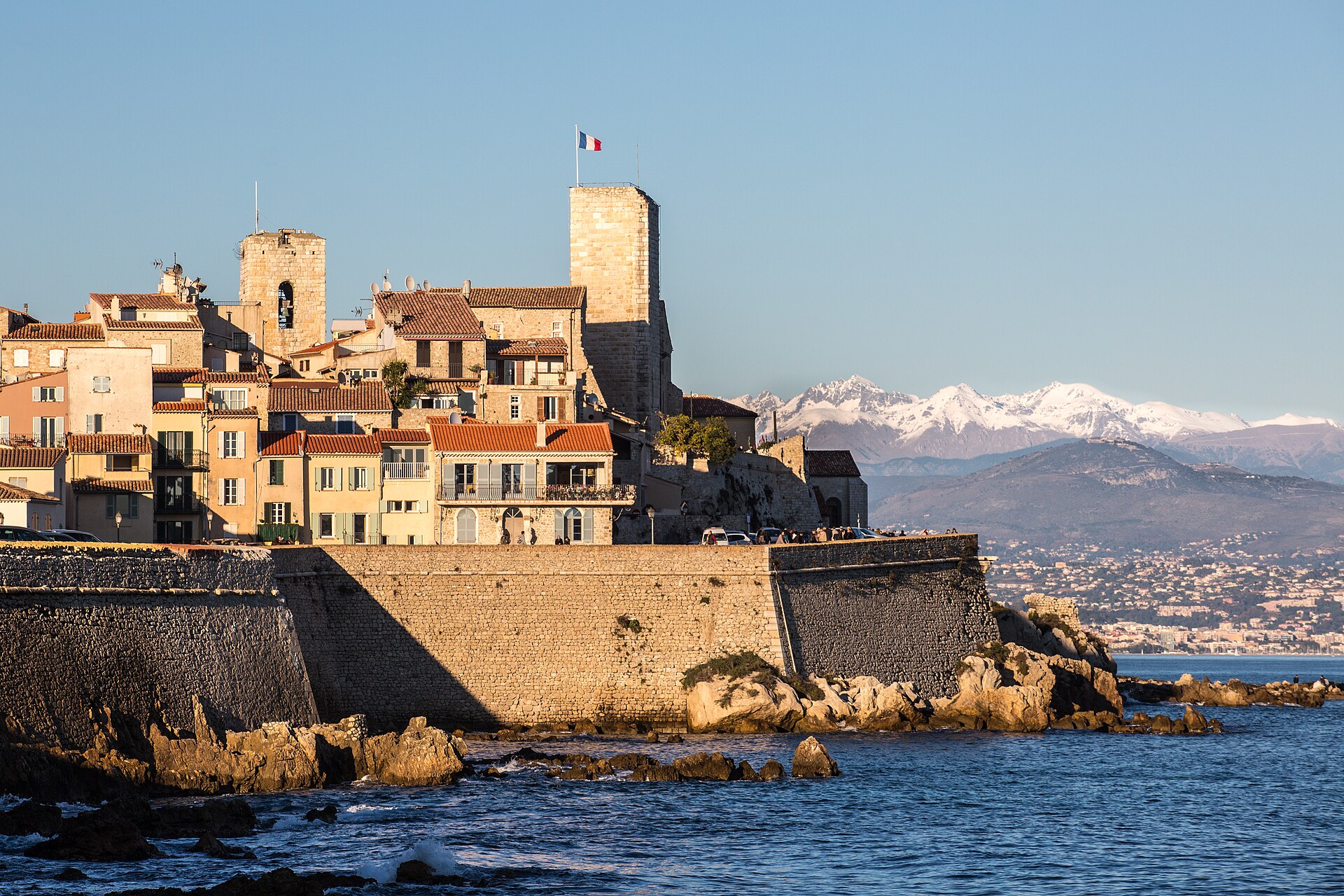
Neighborhood by neighborhood: reading the map like a local
Antibes is not one city, it is a mosaic of micro-neighborhoods, and each has its own reputation among residents. Understanding the map is the single most useful thing you can do before choosing where to live or where to book a first stay.
The Vieil Antibes and Port Vauban
The old town, inside the ramparts, is one of the most reassuring places to walk in the region, day or night. Streets are narrow, foot traffic is constant, restaurants stay open late, and the presence of the marina keeps the area lively year-round. Petty theft happens during peak hours in the market, so keep bags closed and phones in pockets, but the overall feel is family-friendly and calm.
Juan-les-Pins
Juan is the party side of the commune, especially between June and September. Nights are loud, terraces are full, and the beachfront hums until late. It is safe in the sense that crowds are everywhere and police are visible, but if quiet is essential to you, a home two streets back from the pinède will be more comfortable than a first line on the main square.
Cap d’Antibes and the residential hillsides
Cap d’Antibes, the Badine, Salis, and the villa neighborhoods above the town are among the quietest and safest areas on the entire Riviera. Properties are gated, streets are residential, and pedestrians are rare after nightfall simply because the density drops. The main risk profile here is opportunistic burglary on vacant second homes or rental investments, which is why alarms, shutters, and a trusted local caretaker matter.
Areas that ask for a second look
Some pockets near the train station and a few blocks of the northern periphery have a slightly rougher edge, particularly late at night. It is not dangerous by international standards, but if you are house-hunting, walk the street at 10 pm on a Friday as well as at 10 am on a Tuesday. A neighborhood reveals itself in both lights.
Is Antibes safe for solo travelers?
Solo travel to Antibes is, for most people, entirely comfortable. The town is compact, walkable, and used to visitors from every corner of the world. English is widely spoken in restaurants, marinas, and shops, which lowers the friction that sometimes makes solo travel feel exposed.
Getting around on your own
Public transport is reliable during the day. Buses connect Antibes to Nice, Cannes, and Sophia Antipolis, and the train runs frequently along the coast. Evening service thins out, so plan return trips or use a licensed taxi or ride app after dinner. The train station is fine to use, but keep standard urban awareness: watch your bag on platforms, avoid empty carriages late at night.
Practical habits that pay off
- Carry a slim wallet and split cards between two pockets during market mornings.
- Keep your phone off the café table on busy terraces.
- Note your rental address in French; useful if you ever need to call for help.
- Save the European emergency number, 112, and the local police municipale line.
- Avoid unlit sections of the beach promenade very late at night, as you would anywhere.

Is Antibes safe for women, and for solo female travelers?
This question deserves a direct answer rather than a general one. Antibes is broadly considered one of the more comfortable Riviera towns for women traveling alone, dining alone, or walking home from a restaurant in the evening. Streets in the old town stay populated late, and the culture around solo female diners is relaxed and respectful.
Daytime and everyday life
Walking, cycling along the coastal path, shopping at the Marché Provençal, sitting alone at a café with a book: all of this is unremarkable here. Street harassment exists, as in any Mediterranean city, but it is not a defining feature of daily life, and it drops sharply outside the peak summer party zones.
Nightlife and evenings out
Juan-les-Pins in high season is festive and loud, and like any nightlife district, it rewards the usual precautions: watch your drink, leave with people you know, use a booked taxi rather than an unmarked car. Around the old port and inside the ramparts, walking home late feels calm to most residents.
→ Worth knowing
Many women who move here mention the same thing: the freedom to walk to dinner, alone, without a car, is one of the quiet luxuries of daily life in Antibes.
Is Antibes safe for families relocating from abroad?
For families, the safety question widens: it is no longer only about crime, it is about schools, traffic, healthcare, and the general texture of daily life. On all of those, Antibes performs well.
Schools, healthcare, and daily rhythms
The commune hosts public French schools, several bilingual options, and easy access to international schools in Sophia Antipolis and Mougins. Healthcare is excellent: general practitioners, specialists, pediatric services, and the Antibes hospital are all within a short drive, and the CHU in Nice is roughly thirty minutes away.
Traffic calms outside the summer rush, and residential streets in Cap d’Antibes, La Fontonne, or the quieter Juan back streets feel appropriate for children walking to school or biking to friends’ homes. Parks, beaches, sports clubs, and sailing programs are abundant.
Choosing the right neighborhood for family life
Families relocating from abroad usually weigh three criteria: proximity to schools, quiet at night, and access to nature. The table below summarizes how the main areas compare on the questions that come up most often during our client calls.
| Area | Safety feel | Best for | Indicative budget (house) |
|---|---|---|---|
| Vieil Antibes | Lively, well-patrolled | Walkable lifestyle, couples, retirees | Apartments from around 400,000 to 1.2M € |
| Cap d’Antibes | Very quiet, residential | Families, privacy, second homes | Villas from 1.5M € to well above 10M € |
| Juan-les-Pins | Lively in summer, calm in winter | Beach lifestyle, seasonal use | Apartments from around 350,000 to 900,000 € |
| La Fontonne, La Croix Rouge | Residential, family friendly | Families with school-age children | Houses from around 700,000 to 1.5M € |
Documents, residency, and small legal reassurances
Feeling safe also means feeling settled legally. Registering with the local mairie (town hall), enrolling children in school, and setting up healthcare through the French social security system are all straightforward, especially when handled with local guidance. A notaire (the public officer who oversees property transactions in France) will secure your purchase; the process is regulated, transparent, and one of the reasons buying property in France is considered so protective for the buyer.

Practical safety habits for your first year in Antibes
Once you move in, most of your safety concerns will shift from crime to logistics: winter storms, occasional flooding in low-lying spots, seasonal wildfires in the hills, and the very Mediterranean art of leaving a home closed for weeks without worry.
Protecting a home you don’t always occupy
Second homes need a rhythm of care. Solid shutters, a monitored alarm, timed lighting, and above all a trusted local contact who checks the property regularly are the four pillars. Insurance is affordable and comprehensive, and most policies expect certain minimum protections to be in place.
Seasonal and environmental awareness
Autumn brings the occasional heavy Mediterranean storm; summer brings fire risk in the wooded hillsides. Neither should worry you, but both should inform choices: gutters cleared before autumn, defensible space around a villa, and awareness of the local vigilance alerts issued by the préfecture.
→ The key point
The single best safety investment for a second home in Antibes is a reliable person on the ground who knows your property, not another camera on the wall.
How FRE handles the safety question for buyers
When clients ask us “is Antibes safe?”, we rarely stop at a yes or no. Safety is neighborhood-specific, lifestyle-specific, and often street-specific. That is where local eyes matter.
Reading a street before you sign
Our agents walk the streets you are considering, at different times of day, and report back with honest observations: noise levels, foot traffic, parking realities, the character of the immediate neighbors. It is the kind of texture no listing photo will ever show you, and no algorithm can approximate the judgment of someone who has lived in the area for years.
A turnkey path from search to keys
From the first shortlist to the compromis de vente (the preliminary sales agreement), the notaire appointments, the renovation phase, and the final furnishing, your project is handled end to end by a team that lives here. You get clarity on what each area is really like, guidance through the French legal process, and peace of mind that someone competent is on the ground when you cannot be.
A trusted network for after the purchase
Craftsmanship, security installers, insurance brokers, property managers, gardeners: the same trusted network that helped you buy the home continues to support you once you own it. That continuity is often what turns a house into a settled art de vivre.
So, is Antibes safe enough for the life you have in mind?
For most solo travelers, women, couples, and families, Antibes is a reassuring place to visit and a genuinely comfortable place to live. Petty theft exists in tourist pockets, as it does in every desirable Mediterranean town, but violent crime is uncommon, residential neighborhoods are calm, and the municipality continues to invest in a visible daily presence. Pair that with world-class healthcare, excellent schools within reach, and a walkable urban core, and you have the ingredients of a very livable coastal town.
The safest move you can make is also the least dramatic one: visit, walk your target streets at different hours, talk to residents, and lean on people who know the ground. If Antibes is on your shortlist for your French home, the FRE team would be glad to walk it with you, answer the questions your search has raised so far, and help you shape a life project that feels as solid as it does beautiful. Shall we start with your neighborhood shortlist?
Living in Antibes
Continue exploring life in Antibes
- Who lives in Antibes: the demographics
- The cost of living in Antibes
- Buying property in Antibes: our real estate guide
See the full Antibes real estate news and city guide.
>