





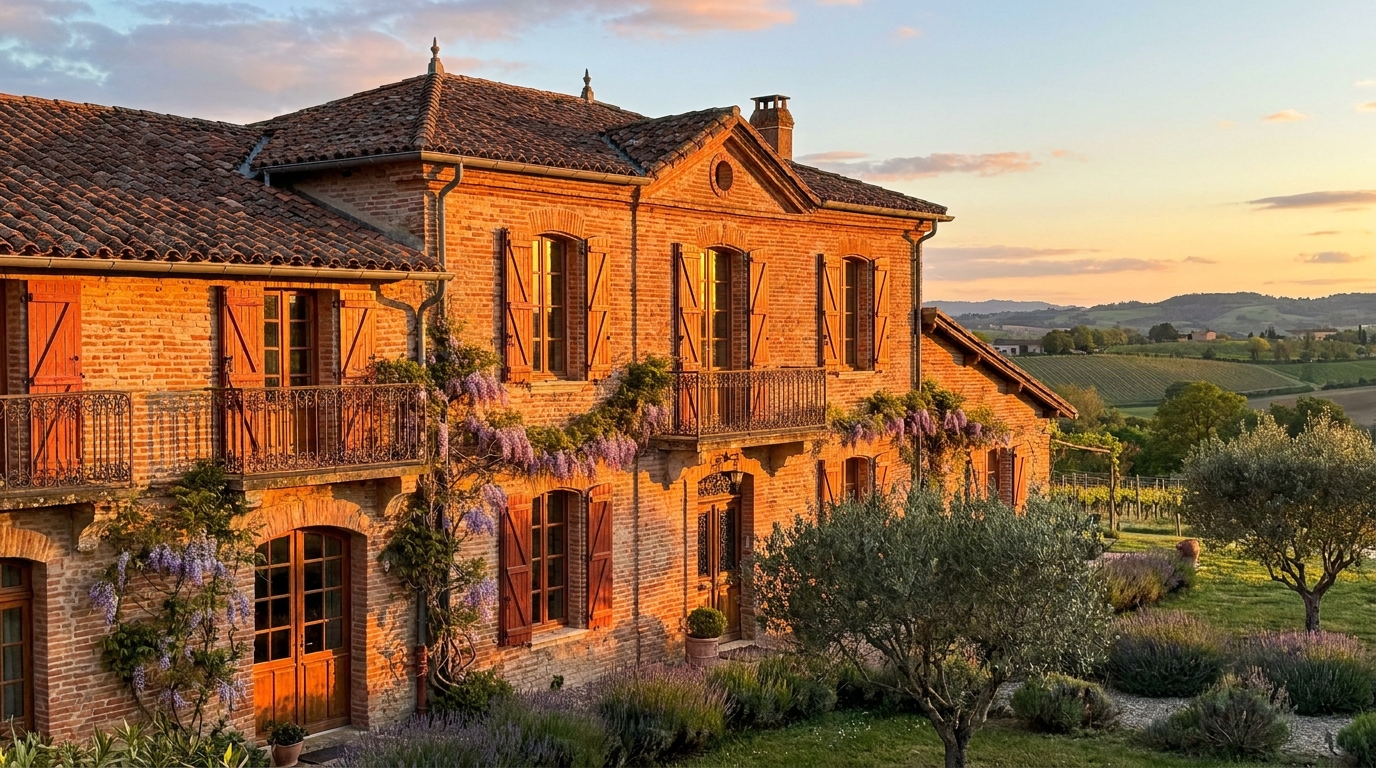

Toulouse has a way of surprising international buyers. It is France’s fourth-largest city, home to Airbus and a dense student population, yet it still trades at roughly half the price per square meter of Paris. The Ville Rose, named for its warm terracotta brick facades, sits on the Garonne between the Atlantic and the Mediterranean, and its property market reflects that in-between character: dynamic, but still reasonable for those who know where to look. Ideal for a turnkey buy-to-let investment: our comparison of the best turnkey agencies in France shows who can run the whole project for you in Toulouse.
If you are considering a second home or a primary residence here, understanding Toulouse property prices per square meter is your starting point. Not to chase a bargain, but to buy well, with clarity on what a fair number looks like in each quartier (neighborhood).
Toulouse price per square meter at a glance
| SeLoger (€/m²) |
Meilleurs Agents (€/m²) |
10-year change |
|
|---|---|---|---|
| Apartment | €3,520 | €3,565 | +27.6% |
| House | €4,332 | €4,129 | +20.7% |
Sources: SeLoger (data to January 2026) and Meilleurs Agents (1 October 2026). The ten-year change is the Meilleurs Agents price index for Toulouse.
Understanding Toulouse Property Prices per Square Meter Today
Buying here? See our Toulouse real estate page: buyer’s agent and renovation studio, handled in English.
The Toulouse market has matured. After several years of steep appreciation driven by the aerospace industry and internal French migration toward the south, values have flattened and, in several neighborhoods, softened. That shift matters for you as a buyer.
The Current Price Range Across the City
Citywide, apartments in Toulouse typically trade between roughly 3,200 and 4,800 euros per square meter, with prime addresses in the hypercenter pushing above 5,500. Houses sit in a similar bracket on average, though the range is wider because plot size, garden, and parking weigh heavily on the final number. Prices vary just as widely across the rest of Occitanie, which makes a regional comparison worth the detour.
What does that mean concretely? A well-located 70 sqm apartment in a good quartier generally lands between 280,000 and 380,000 euros. A family townhouse of 120 sqm with a small garden in a residential neighborhood often falls between 480,000 and 720,000 euros, depending on condition and street.
Houses vs. Apartments: Two Different Markets
Apartments dominate the historic core, built in the pink brick that gives the city its nickname. Houses, especially the classic toulousaine (a narrow single-story brick house with a small courtyard), are concentrated in the outer ring and the residential faubourgs. The two markets do not move in perfect sync.
Apartments are more liquid and more sensitive to interest rate shifts. Houses with outdoor space have held their value more firmly, because demand from families and second-home buyers seeking a garden remains steady.
How the Market Has Evolved
Over the past decade, Toulouse posted one of the strongest appreciation curves among major French cities, with values rising by roughly 35 to 45 percent between the mid-2010s and the recent peak. The correction that followed the rise in mortgage rates has been measurable but orderly: a pullback of 4 to 8 percent in most neighborhoods, sharper in outlying areas and gentler in the prime central streets.
For a buyer arriving today, that translates into a market where negotiation has real room to breathe, and where the frantic bidding of a few years ago has largely faded.
Neighborhood by Neighborhood: Where the Money Sits
Toulouse is a city of contrasts, and prices per square meter can double from one quartier to the next. Choosing the right neighborhood is often more important than choosing the right building. For the security picture street by street, see Is Toulouse safe?
The Prime Central Districts
The historic core between Place du Capitole, Saint-Étienne, and the Carmes is where the highest prices concentrate. Expect 5,000 to 6,500 euros per square meter for a renovated apartment in a period building, more for a rare hôtel particulier apartment with original moldings and parquet.
These addresses appeal to buyers looking for the full Toulouse art de vivre: cafés below the windows, the Saturday market at Victor Hugo, the Garonne a five-minute walk away.
Saint-Étienne and Carmes
Saint-Étienne is the discreet, moneyed corner of the city, quiet cobbled streets, private courtyards, antique galleries. Carmes is livelier, more bohemian, but equally prized. Both routinely trade above 5,500 euros per square meter for quality product.
Capitole and Saint-Georges
The area immediately around the Capitole is the beating heart of the city. Prices are strong but supply is thin, and turnover is limited, which is exactly why on-the-ground sourcing matters here.
The Sought-After Residential Neighborhoods
Beyond the historic core, several neighborhoods offer a gentler pace and more space for the money.
- Les Chalets and Compans-Caffarelli: elegant, tree-lined, popular with families. Around 4,200 to 5,000 euros per square meter.
- Saint-Cyprien: the left bank of the Garonne, artistic and vibrant, roughly 3,800 to 4,500 euros per square meter.
- Busca and Demoiselles: the classic bourgeois quartier, home to many toulousaines and Belle Époque villas, 4,500 to 5,500 euros per square meter for houses.
- Côte Pavée: leafy, residential, family-focused. Houses often between 500,000 and 900,000 euros.
→ On the ground
In Busca and Les Chalets, the best toulousaines often sell off-market through local networks before ever hitting the portals. A buyer working remotely from abroad rarely sees them without a local partner making the calls.
The Emerging and More Accessible Areas
Toulouse still offers neighborhoods where values sit noticeably below the citywide average, either because they are in transition or simply less central. Minimes, Bonnefoy, and parts of Saint-Michel trade between 2,800 and 3,600 euros per square meter, sometimes less for product needing work.
These are not universally right for every buyer, but for someone comfortable with a renovation project, or looking for a pied-à-terre with strong long-term potential, they deserve a serious look.
A Comparative View: What Your Budget Buys
Numbers on a page are one thing; what they translate into is another. The table below gives you a realistic snapshot of what different budgets currently secure in Toulouse.
| Budget | Neighborhood profile | Typical property |
|---|---|---|
| 250,000 to 350,000 € | Saint-Cyprien, Minimes, Saint-Michel | 2-bed apartment, 55 to 75 sqm, some updates possible |
| 350,000 to 500,000 € | Les Chalets, Compans, central Carmes | Renovated 3-bed apartment, 75 to 95 sqm, character features |
| 500,000 to 750,000 € | Busca, Côte Pavée, Demoiselles | Toulousaine or small townhouse with courtyard, 100 to 140 sqm |
| 750,000 € and above | Saint-Étienne, prime Capitole, Busca | Family house with garden, or top-floor apartment with terrace |
Why Ranges Matter More Than Averages
An average price per square meter is a useful compass, but it hides the reality that two apartments on the same street can trade 20 percent apart based on floor, light, condition, and whether a lift, cellar, or parking space is included. Never anchor your judgment on the citywide figure alone.
The Weight of the DPE
The DPE (Diagnostic de Performance Énergétique), the mandatory French energy performance rating, now moves prices visibly. A property rated F or G carries a discount of 8 to 15 percent compared to a similar B or C, and French regulation restricts renting out the worst-rated homes. For an owner-occupier this is less of a constraint, but it is always a negotiation lever.
Why Negotiation Really Matters Right Now
This is the point most international buyers underestimate. The Toulouse market has moved from a sellers’ market to something genuinely balanced, and the gap between asking price and signed price has widened.
The Return of Real Negotiation Margins
On well-priced properties, expected discounts sit around 3 to 5 percent. On properties that have been on the market for more than a few months, or that carry an unfavorable DPE, or where the seller has already bought their next home, negotiation margins of 8 to 12 percent are common, and occasionally more.
Sellers who set their asking price during the peak years and have not adjusted their expectations often accept meaningful reductions once a serious, well-argued offer arrives. The keyword is argued: a number without justification rarely lands.
What a Strong Offer Actually Looks Like
A credible offer in the current market rests on three pillars.
- Comparable transactions from the same street or micro-neighborhood, drawn from notarial data rather than portal asking prices.
- An honest read of the property’s weaknesses: DPE, works needed, co-ownership charges, layout constraints.
- Financing clarity, so the seller knows the transaction will close.
Without those three, a low offer reads as opportunistic and gets refused. With them, the same offer becomes a professional proposal that a seller and their agent take seriously.
→ Good to know
In France, the notaire holds public transaction records. A local buyer’s agent can pull genuine sold prices on a specific street, which is far more powerful in a negotiation than any online estimate.
The Hidden Costs You Must Factor In
The headline price is not the full picture. On an existing property, frais de notaire (notary fees, which actually include most of the taxes on the transaction) add roughly 7 to 8 percent to the purchase price. Co-ownership charges, local property taxes (taxe foncière), and any planned building works should also be checked before you commit.
Building a negotiation strategy without those numbers in hand is like driving without a windshield. Clear-eyed budgeting is what allows you to bid confidently and stop at the right ceiling.
How a Buyer’s Agent Changes the Outcome
Buying remotely, from another country, in a language that is not yours, in a market whose rhythms you do not live daily, is genuinely difficult. This is where a buyer’s agent earns their fee.
Sourcing Beyond the Public Listings
A meaningful share of Toulouse’s best properties never appears on the major portals, or appears for a matter of days before being sold. Off-market sourcing runs through relationships: with local agents who call you first, with notaires handling estate sales, with private sellers who prefer discretion. A trusted network built over years opens doors that a weekend of online research never will.
Reading the Property Honestly
A local advisor visits the property in person, checks the building, the co-ownership minutes, the neighborhood at different times of day, the noise from the street, the direction of light. You receive a candid report, video walk-throughs, and a clear recommendation on whether to proceed and at what number.
The Technical Layer
French property files include the diagnostics techniques, the compulsory reports on energy, asbestos, lead, electrical safety, and more. Reading them properly, and pricing in any works needed, is part of what protects you from a bad surprise after the compromis de vente (the binding preliminary sales contract) is signed.
The Negotiation Itself
A good buyer’s agent negotiates in French, on your behalf, with the seller’s agent or directly with the seller. The tone, the timing, the sequence of counter-offers: all of this shapes the final number. Handled well, the agent’s fee is often more than covered by the discount obtained.
A Turnkey Project, Handled End to End
Beyond the purchase itself, a full-service approach covers what comes after: coordinating the notaire, opening a French bank account, arranging insurance, then, if you wish, managing renovation, interior design, and furnishing with local craftsmanship. Your French home comes together while you continue your life abroad, with regular updates and a single point of contact.
→ The key point
In an ultra-digital market, a real relationship on the ground is what turns a stressful remote purchase into a calm, well-run life project. Algorithms estimate; local advisors decide.
What to Expect from the Process
A well-structured buying process in Toulouse typically follows a clear rhythm: an initial briefing on your goals and budget, a shortlist of properties matching your criteria, in-person visits with detailed feedback, negotiation, signing of the compromis de vente, a cooling-off and financing period of two to three months, and finally the acte authentique at the notaire‘s office, which transfers ownership.
Knowing what happens at each step, and having someone handle the French-language logistics for you, is what makes the difference between a purchase you enjoy and one you endure.
Looking Ahead: Buying Well in the Current Cycle
Toulouse remains one of the most compelling French cities for international buyers. The economy is anchored by aerospace, health, and higher education. The population continues to grow. The climate, the food, the proximity to both the Pyrenees and the Mediterranean coast, all support long-term demand for well-located homes.
At the same time, the current cycle offers something that was missing a few years ago: room to negotiate, time to think, and sellers who listen. Toulouse property prices per square meter tell part of the story, but the real value lies in choosing the right street, the right building, the right floor, and paying the right number for it.
Would you like to explore what your budget could buy in Toulouse, with a clear read of the neighborhoods, the trade-offs, and the negotiation levers available? A conversation with our team on the ground is where a French home project begins to take real shape, and where the numbers on this page start to become your own.