






Nice is one of the easier large French cities to live in without a car, and the census data backs that up. Nearly a third of working residents already commute by public transport, a share well above the norm for a French city of this size. For a foreign buyer used to American car dependence, that is a genuine quality-of-life argument, and a financial one too.
This guide walks through how Nice actually moves. The tram network that reshaped the city in a little over a decade, the airport on your doorstep, the coastal trains to Monaco and Italy, and what all of it means for where you should buy. Numbers below come from the 2022 INSEE census. The conclusions come from helping international clients choose addresses that hold their value.
How Nice commutes
Of roughly 139,379 working residents, 44.1% drive to work by car or van. That is the single largest group, as it is almost everywhere in France. What sets Nice apart is the next line: 29.5% commute by public transport, far above the 15 to 20% you tend to see in French cities of comparable size. Another 11.7% walk, 7.6% use a two-wheeler, and 3.1% cycle. A small 4.1% report needing no transport at all, a reminder of how compact and mixed-use the centre really is.
The headline is simple. In Nice, public transport is not a fallback for people who cannot drive. It is a mainstream, often preferred way to get around, and that single fact changes how you should think about location, parking and resale. When roughly three in ten people choose the tram or bus over their own car, the network is not a convenience bolted onto the city. It is part of how the city works, and it shapes where value collects.
It is worth pausing on how unusual that figure is. A public-transport share approaching thirty percent is the kind of number you associate with much larger metropolitan areas, not a Mediterranean city of this size. It tells you the system is genuinely useful, frequent enough to rely on, and woven into daily routines rather than reserved for the commute. For a buyer comparing Nice with other Riviera towns, this is a quiet but decisive advantage.
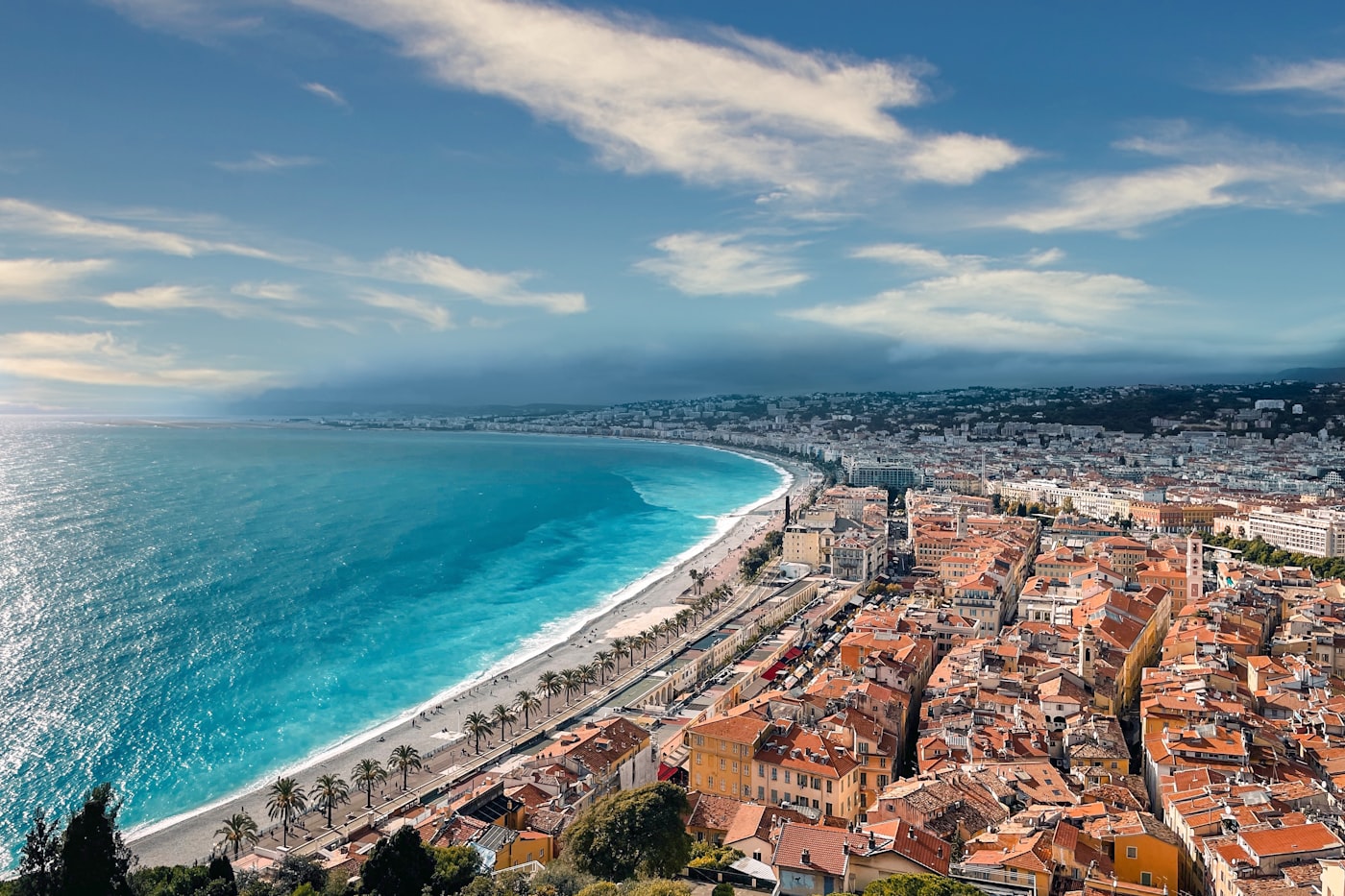
The tram changed the city
Nice now runs three tram lines, and they are the reason the public-transport numbers look the way they do. Line 1 climbs north from the centre. Line 2 runs broadly east to west and, crucially, connects the centre and the port directly to the airport. Line 3 extends the network further out. Together they tie the dense heart of the city to neighbourhoods that, a generation ago, felt peripheral.
For a buyer this is one of the most important facts about Nice. Being on or within a short walk of a tram stop is now among the strongest drivers of both rental demand and resale value. Districts like Riquier, Liberation and Nice Nord were pulled into easy reach of the centre by the tram, and prices and tenant interest followed. When we assess an address, the distance to the nearest tram stop sits near the top of the checklist.
Living in Nice without a car
Plenty of residents in central Nice do not own a car, and they manage comfortably. The combination of three tram lines, a dense bus network and a flat, walkable historic core means daily life rarely requires driving. Groceries, schools, cafes and the seafront are usually within a few minutes on foot or a short tram ride. The Promenade des Anglais, the markets of the old town and the main shopping streets all sit within a walkable, well-served core.
Going car-free has a real financial upside in a city like this. Parking is scarce and often expensive in the centre, and a dedicated parking space or garage can add a meaningful premium to a purchase. If your lifestyle genuinely does not need a car, you can put that budget into the apartment itself. If you do want one, factor parking in early, because retrofitting a space is rarely an option in old buildings.
When a car still earns its keep
Honesty matters here. The car is still the most common way to commute in Nice, and for good reason. The wider Riviera, the hill villages of the arriere-pays, the markets and beaches beyond the tram map, all of these open up far more easily with a car. Families with children outside the centre, or owners who plan to explore Provence and the Alpes-Maritimes at the weekend, will often want one.
The practical takeaway is to match the property to how you will actually live. A pied-a-terre near a tram stop for someone who flies in for long weekends has very different needs from a family home where the school run and weekend trips drive the routine. Both work in Nice. They simply point you to different quarters.
Buy near the tram. In Nice it now drives rental demand and resale value as much as the sea view does.
The airport, and beyond
Nice Cote d’Azur is the second busiest airport in France, behind only the two Paris hubs. It offers direct flights across Europe and seasonal long-haul routes, and it sits right on Tram Line 2 into town. For an international owner who travels often, that connectivity is one of the city’s strongest practical arguments. You can land and be in the old town without ever touching a taxi.
The rail links are just as compelling. Mainline trains run along the coast to Monaco in about twenty minutes and to the Italian border in under an hour. Day trips to Menton, Ventimiglia or Monte-Carlo are genuinely casual outings rather than expeditions. Few Mediterranean cities combine a major airport, fast coastal rail and a working tram network in such a compact footprint.
What transport means for resale value
Transport access is not a soft amenity in Nice. It is priced into the market. An apartment a short walk from a tram stop, well served by buses and close to the centre, will both rent faster and resell more easily than an otherwise similar flat that depends entirely on a car. In a city where so many residents choose public transport, that liquidity is worth paying attention to.
This is why we weigh connectivity heavily when we shortlist properties for clients. A beautiful apartment that is awkward to reach can be a slower asset to exit. A slightly plainer one on a tram corridor often holds its value better, because the pool of future buyers and tenants is simply larger. Sea views still command a premium, of course. The point is that proximity to the tram now sits alongside the view, not far below it.
If you intend to rent the property, whether long-term or seasonally, the same logic applies with even more force. Tenants and short-stay guests prize easy access to the tram and the airport, and listings that can promise a short walk to a stop tend to fill faster and command firmer rates. A transport-friendly address is, in practice, a more forgiving investment. It widens your options when you eventually sell and steadies your income while you hold.
Matching neighbourhood to how you move
The right quarter in Nice depends on your transport habits as much as your taste. If you want to live car-free and be in the thick of things, the central districts and the tram corridors give you the easiest daily life. If you value the airport above all, anything with a clean run on Line 2 keeps your travel friction low. And if weekends in the hills matter most, you may accept a slightly less central address in exchange for easy road access and parking.
None of this is one-size-fits-all, which is exactly why we start every search by asking how you will use the property. The transport map, read correctly, narrows the city down to the handful of streets that fit your life. That is far more useful than a long list of pretty listings spread across quarters that do not suit how you actually get around.
How we help
We factor transport into every search, because in Nice a tram stop nearby can matter as much as the floor plan or the view. We are an English-speaking advisory built for international and US buyers, so you never have to navigate French listings, agents or paperwork alone. Tell us how you plan to use the property, whether you need a car and where you will travel most, and we will steer you to the right line and quarter. We reply within 48 hours.
Good to know
Getting around Nice, the questions buyers ask.
Do you need a car to live in Nice?
Not in the city. Nearly 30% of residents already commute by public transport and another 12% walk. Three tram lines, frequent buses and a walkable centre make car-free living realistic. A car still helps for exploring the wider Riviera and the hill villages at the weekend.
How many tram lines does Nice have?
Three. Line 1 runs north from the centre, Line 2 connects the centre and the port directly to the airport, and Line 3 extends the network further out. Together they reshaped how the city moves in little over a decade.
Does the tram go to the airport?
Yes. Tram Line 2 runs directly from the city and the port to Nice Cote d’Azur airport, which is the second busiest airport in France.
How well connected is Nice for international owners?
Very. The airport serves most of Europe with seasonal long-haul routes, and coastal trains reach Monaco in about twenty minutes and the Italian border in under an hour. It is one of the best-connected cities on the Mediterranean.
Does being near the tram affect property value?
Yes. Proximity to a tram line is now one of the clearest drivers of rental demand and resale value in Nice, particularly in districts the tram brought closer to the centre, such as Riquier, Liberation and Nice Nord.
Is parking a problem in central Nice?
It can be. Parking is scarce in the centre, and a dedicated space or garage adds a real premium to a purchase. If you can live car-free, you may prefer to put that budget into the apartment itself. If you want a car, plan for parking from the start.
Which neighbourhoods are best if I rely on public transport?
The central districts and the tram corridors give you the easiest car-free life. Riquier, Liberation and Nice Nord became far more convenient once the tram reached them, and any address with a short walk to a stop on Line 1 or Line 2 keeps daily travel simple.
Can I reach Monaco and Italy easily from Nice?
Yes. Mainline coastal trains run to Monaco in about twenty minutes and to the Italian border in under an hour, so day trips along the Riviera are casual outings rather than expeditions.