





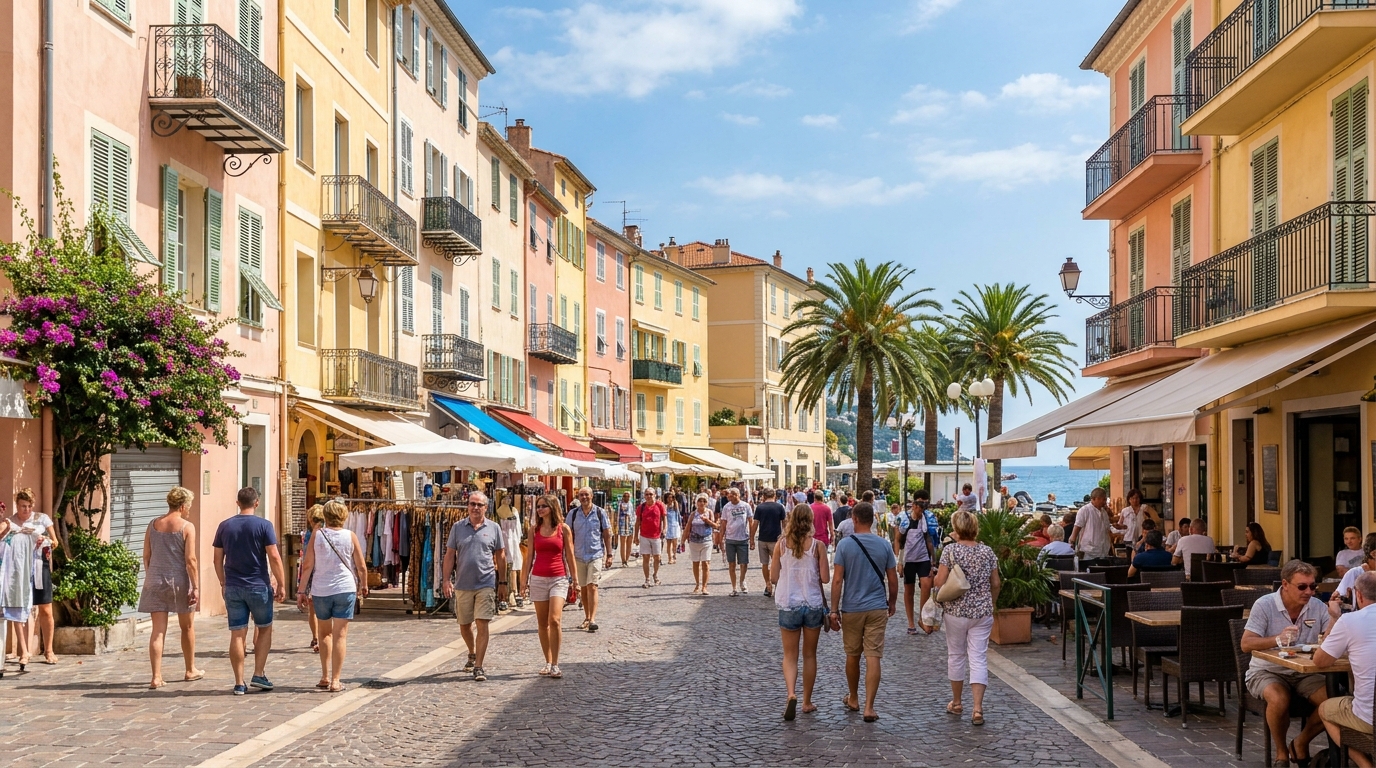

Picture a horseshoe-shaped bay where fishing boats bob in front of ocher facades, kids walk home from school along cobbled lanes, and retirees sip pastis on a sunlit terrace. That is Villefranche-sur-Mer, tucked between Nice and Cap-Ferrat. And the question that keeps coming up, whether you are planning a solo trip, a family relocation, or the purchase of your French home, is simple: is Villefranche-sur-Mer safe?
The short answer is yes, and by most measures reassuringly so. But safety is more than a headline number. It is what you feel walking home after dinner, how comfortable a teenager is on the bus, whether an older parent can navigate the harbor without worry. Let’s look at the town with the calm, factual lens you would want from someone actually on the ground.
Villefranche-sur-Mer in Context: A Quiet Neighbor on a Busy Coast
Recorded crime in Villefranche-sur-Mer, 2025
Villefranche-sur-Mer in four safety numbers
These are the offences actually recorded by the police across the whole commune of Villefranche-sur-Mer, which has 5,008 residents. Counts matter more than rates here: a rate per 1,000 residents means little in a place that hosts many times its own population in visitors, so the raw number of cases is shown first.
Home burglaries
8.41per 1,000 homes
46 recorded in 2025
down 45% since 2016
Theft without violence
84cases recorded in 2025
16.77 per 1,000 residents
Not compared with the national average: the commune counts far more visitors than residents.
down 8% since 2016
Assault outside the home
10cases recorded in 2025
2.00 per 1,000 residents
Not compared with the national average: the commune counts far more visitors than residents.
Vehicle theft
17cases recorded in 2025
3.39 per 1,000 residents
Not compared with the national average: the commune counts far more visitors than residents.
Source: SSMSI, the statistics service of the French Ministry of the Interior, communal database of recorded crime (2025 data, published June 2026). Population and housing figures: INSEE (5,008 residents, 5,467 dwellings). Burglary is measured per 1,000 dwellings, the three other indicators per 1,000 residents.
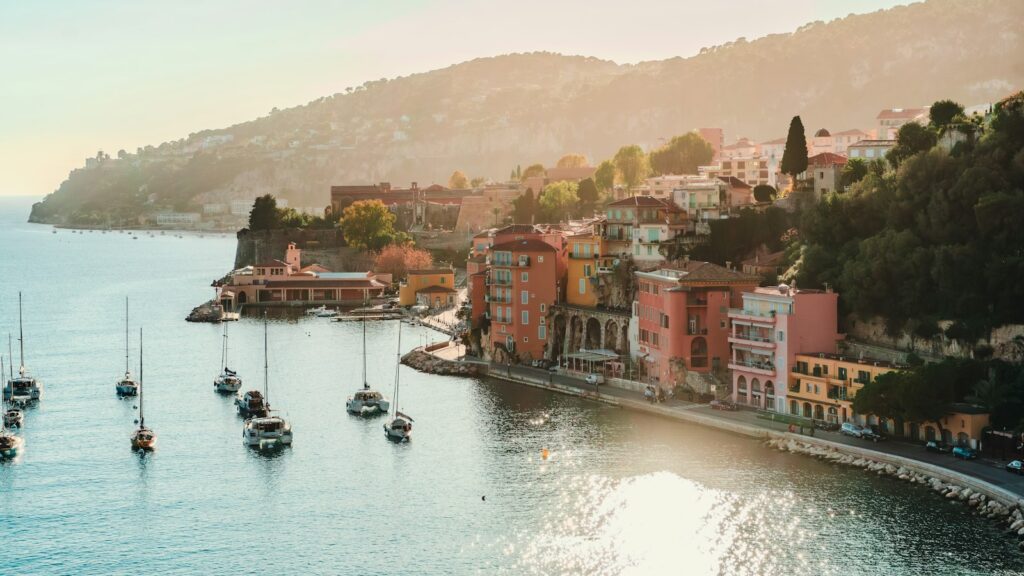
Villefranche sits within the Métropole Nice Côte d’Azur, and its identity is that of a small port town rather than a big-city district. Around 5,000 residents live here year-round, a number that swells with summer visitors and cruise-ship day trippers.
A town shaped by geography
The old town is compact, pedestrian, and easy to read. Steep alleys, a single main road along the water, and a citadel from the sixteenth century. That physical scale matters for safety: streets are short, sightlines are clear, and there is very little anonymous, sprawling territory where petty crime tends to concentrate.
Where it fits on the Riviera
Compared with Nice, its lively neighbor five minutes away by train, Villefranche feels distinctly residential. The nightlife is measured. The port closes down early. You get the art de vivre of the Côte d’Azur (see our guide to the regions of France), minus the volume. For many buyers and long-stay visitors, that combination is precisely what makes the town appealing.
Is Villefranche-sur-Mer Safe? The Data Behind the Feeling
Official French crime statistics are published by the Ministry of the Interior and broken down by commune. Villefranche-sur-Mer consistently ranks among the calmer municipalities of the Alpes-Maritimes department.
What the numbers actually show
Violent crime is rare. The bulk of incidents recorded locally are property-related: opportunistic theft, occasional car break-ins near tourist parking, and pickpocketing during the peak cruise season around the port. Burglary rates are moderate and clearly lower than in the larger urban cores of Nice, Cannes or Antibes.
To give you a concrete sense of scale, the categories that matter most day-to-day look like this:
| Category | Typical profile in Villefranche |
|---|---|
| Violent crime against persons | Very low, isolated incidents |
| Residential burglary | Moderate, mostly targeting empty second homes |
| Pickpocketing and petty theft | Concentrated around the port during cruise arrivals |
| Vehicle break-ins | Occasional in unattended parking zones |
| Drug-related offenses | Low compared with neighboring cities |
How safety has evolved
Over recent years, the town has invested in visible reassurance: expanded municipal police presence, video protection covering the port, main squares and access roads, and better lighting along the coastal path toward Cap-Ferrat. Cooperation with the Nice Métropole police has tightened, and response times in the historic center are short simply because the geography is compact.
The trend, according to local officials and the residents we speak with regularly, is one of stability with gradual improvement in the areas that matter most for visitors and homeowners.
→ Good to know
When cruise ships are in port, pickpocketing risk temporarily rises around the tender landing and the Rue du Poilu. Keep valuables zipped and phones out of back pockets during those windows.
Solo Travelers: What to Expect Walking the Streets Alone
If you are considering a solo trip or a scouting visit before buying, Villefranche is one of the more comfortable bases on the Riviera. The town rewards slow, unhurried exploration, and you rarely feel out of place moving around on your own.
Daytime rhythm
Mornings at the market, an afternoon swim at Plage des Marinières, an early aperitif at the port. You will cross the same faces more than once in a single day, which builds a quiet sense of familiarity fast. Solo diners are common on café terraces; nobody blinks.
Evenings and late nights
The town winds down early compared with Nice. By around 11 p.m., the streets are quiet. Walking back to a rental in the old town or along the main road is generally comfortable, though the usual common sense applies: stay on lit streets, avoid the darker sections of the coastal footpath at night, and take a licensed taxi rather than an unmarked car.
Getting around without a car
The train station connects Villefranche to Nice in six minutes and to Monaco in about twenty. Buses run regularly along the Basse Corniche. As a solo traveler, this is a significant safety asset: you can plan an entire stay without ever driving the narrow, twisting corniches at night.
Female Travelers and Residents: Comfort in Daily Life
The question of how safe a place feels for women is a legitimate part of any relocation or purchase decision, and it deserves a direct answer rather than a polished one.
The general climate
Villefranche has the atmosphere of a small Mediterranean town where people know each other. Street harassment is uncommon, particularly compared with denser urban environments. Women walking alone, running along the seafront in the morning, or dining solo in the evening describe the experience as low-key and unbothered.
Practical habits that help
– Prefer the lit main road (Avenue Sadi Carnot, Boulevard Princesse Grace) over unlit shortcuts after dark.
– Keep the number of a trusted local taxi company saved in your phone; ride-hailing is available but less consistent than in Nice.
– If you rent short-term, verify that the entry door of the building has a working code or intercom, not just a key lockbox on the street.
For women planning to move here
The everyday texture of life feels safe: school runs, evening yoga class, a late walk to buy bread on a Sunday. Networks form quickly through associations, sports clubs, and expat groups in Nice and Beaulieu-sur-Mer. That social fabric is itself a form of security, and it is one of the things clients mention most often after settling in.
→ On the ground
Ask your local advisor which specific street or building you are considering, not just which town. In Villefranche, the difference between a quiet residential lane and a noisier stretch near the port can be a hundred meters.
Families Relocating to Villefranche-sur-Mer
Families are the group that ask the safety question most seriously, and rightly so. The answer here is genuinely encouraging, but the details matter.
Schools and the walk to class
The town has public primary schools, and older children typically continue in Nice or Beaulieu, easily reached by train or bus. Kids taking the local bus or train in the morning is a normal, unremarkable sight. International schooling is available in Nice and along the coast, with private options such as the International School of Nice within a short commute.
Outdoor life and everyday risks
The real safety topics for families here are not crime-related. They are practical: sun exposure, sea safety at the beach, and driving on narrow roads with tourist traffic in summer. The bay is sheltered, lifeguards are present in season at Plage des Marinières, and the water is famously calm, one of the deepest natural harbors in the Mediterranean.
Healthcare access
You are minutes from major hospitals in Nice (CHU Pasteur, Hôpital Saint-Roch) and close to specialized pediatric care. Local pharmacies rotate on-call duty, and general practitioners are accessible in town and nearby. For families relocating from abroad, this proximity to first-rate medical infrastructure often outweighs everything else on the safety checklist.
The social feel for children
Kids play on the small squares, cycle along the seafront path, and use the beach as an extension of their backyard. Parents describe an old-fashioned kind of freedom that is harder to find in bigger cities: little ones can walk to the boulangerie, teenagers can meet friends at the port without a chaperone.
Buying a Home in Villefranche: Safety, Insurance and Peace of Mind
When you move from visiting to owning, the safety conversation broadens. It includes the physical security of the property, the reliability of the transaction, and the practical protections you put in place.
Protecting a second home
Empty houses attract opportunists everywhere in the world, and the Riviera is no exception. In Villefranche, most incidents involving second homes are preventable with straightforward measures:
– Install a monitored alarm system connected to a French provider.
– Fit shutters (volets roulants) with automated schedules to simulate presence.
– Retain a trusted local caretaker (gardien) for regular checks, mail collection and post-storm inspections.
– Notify the municipal police of your absence through the Opération Tranquillité Vacances program, a free service that adds occasional patrols past your address.
The purchase process itself
French property transactions are among the most protected in Europe, precisely because they run through a notaire, the public officer who authenticates the sale and holds the funds. From the compromis de vente (the binding preliminary contract) to the acte authentique (the final deed), each step is regulated. That legal architecture is a form of safety in itself, and it is one reason many international buyers ultimately feel more secure buying in France than in their home country.
The role of a local partner
The transaction is protected, but the market itself still requires reading. Which building has ongoing façade works voted at the last co-ownership meeting? Which street loses sun by early afternoon in winter? Which apparently charming lane fills with delivery scooters on market days? These are the questions that a real, human, on-the-ground team answers with clarity, and they are exactly the questions no algorithm can answer for you.
→ The key point
Safety in Villefranche is less about avoiding a risky area than about choosing the right micro-location for your life project. That choice deserves someone who walks these streets weekly.
Comparing Villefranche with Its Riviera Neighbors
Context helps. Placing Villefranche next to nearby towns clarifies where it sits on the safety and lifestyle spectrum.
A quick side-by-side
| Town | Feel | Overall safety profile |
|---|---|---|
| Villefranche-sur-Mer | Quiet port town, residential | Very reassuring, low violent crime |
| Nice | Urban, dynamic, international | Generally safe, more petty theft in busy zones |
| Beaulieu-sur-Mer | Refined, calm, older demographic | Very calm, similar profile to Villefranche |
| Èze village | Perched, touristic by day, quiet at night | Calm, low incident rate |
| Cap-Ferrat | Exclusive residential peninsula | Highly secure, private and monitored |
What this tells you
You are choosing among towns that all sit on the safer end of the French coastal spectrum. The differences are mostly about atmosphere, price and lifestyle rather than raw safety. Villefranche’s particular appeal is that it manages to feel authentic and lived-in without sacrificing the calm you expect from a smaller commune.
Practical Checklist Before You Arrive or Move In
A short list to keep handy, whether you are visiting for a week or preparing to move.
For visitors
– Save the numbers for local taxis, your rental host, and the municipal police.
– Keep passports and originals in the accommodation safe; carry copies.
– Be attentive around the port during cruise arrival windows.
For future residents and homeowners
– Register with your consulate once you settle.
– Set up French home insurance (assurance habitation) before signing the deed; it is required.
– Meet your building’s syndic (property manager) and neighbors early; a familiar face is your best local security system.
– Ask about the DPE (Diagnostic de Performance Énergétique), which affects comfort and long-term costs more than most buyers expect.
Bringing It All Together
So, is Villefranche-sur-Mer safe? By statistics, by the daily experience of residents, by the confidence of families raising children here and of solo travelers walking the port at dusk, the answer is a measured yes. The town is compact, watched over, socially cohesive, and well connected to first-rate services in Nice.
Safety, though, is only one layer of a much bigger decision. Choosing where to buy your French home is also about light, orientation, community, the way morning coffee tastes on a specific terrace. It is a life project, and it deserves guidance from people who live these streets, know the notaires personally, and can walk you through each step with clarity and peace of mind.
If Villefranche is on your shortlist, that conversation is where we would start. Our buyer’s agent team on the ground is here to help you turn a beautiful idea into a turnkey reality, handled in English, at your pace, with the craftsmanship and trusted network that make the difference between owning a property in France and truly making it your home.