






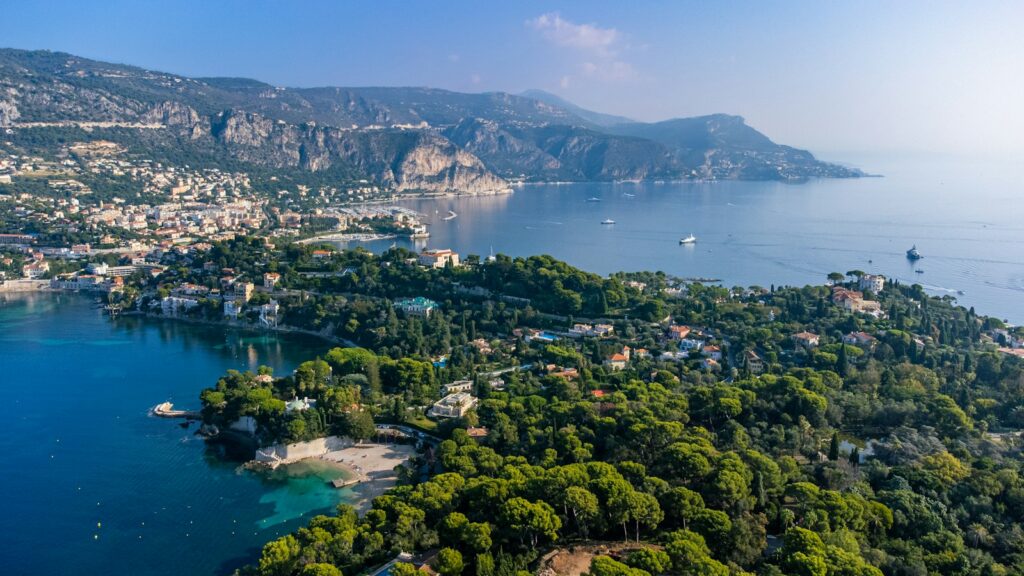
Picture a slender peninsula reaching into the Mediterranean, lined with umbrella pines, discreet gates, and villas whose owners have quietly returned for decades. Saint-Jean-Cap-Ferrat is one of the most protected addresses on the Côte d’Azur (see our guide to the regions of France), and yet the question comes up in almost every discovery call we run with international buyers: is Saint-Jean-Cap-Ferrat safe, really, both to visit and to settle into full-time? The short answer is yes, and the longer answer, the one that matters when you are planning a life project, deserves clarity.
Below, you will find what we see on the ground: the numbers, the way security has evolved, and what the village actually feels like whether you arrive alone, as a woman traveling solo, or with a young family looking for a primary residence.
The Safety Picture of Saint-Jean-Cap-Ferrat Today
Sitting between Nice and Monaco, Saint-Jean-Cap-Ferrat is a commune of roughly 1,900 permanent residents, with a population that swells modestly in summer. Its small scale, its geography (a single road in and out of the cape), and the profile of its residents combine to make it one of the calmest addresses on the French Riviera.
What the Numbers Say
National police statistics for the commune consistently rank Saint-Jean-Cap-Ferrat well below regional averages for violent crime and burglary. The dominant offenses are minor, mostly opportunistic property incidents during the high season, and are concentrated on the busiest days of summer. Compared to larger Côte d’Azur hubs like Nice or Cannes, the difference is significant.
Recorded crime in Saint-Jean-Cap-Ferrat, 2025
Saint-Jean-Cap-Ferrat in four safety numbers
These are the offences actually recorded by the police across the whole commune of Saint-Jean-Cap-Ferrat, which has 1,531 residents. Counts matter more than rates here: a rate per 1,000 residents means little in a place that hosts many times its own population in visitors, so the raw number of cases is shown first.
Home burglaries
Under 5cases recorded in 2025
The Ministry does not publish counts between 1 and 4, so the exact figure stays withheld.
Theft without violence
17cases recorded in 2025
11.10 per 1,000 residents
Not compared with the national average: the commune counts far more visitors than residents.
Assault outside the home
Under 5cases recorded in 2025
The Ministry does not publish counts between 1 and 4, so the exact figure stays withheld.
Vehicle theft
Under 5cases recorded in 2025
The Ministry does not publish counts between 1 and 4, so the exact figure stays withheld.
Source: SSMSI, the statistics service of the French Ministry of the Interior, communal database of recorded crime (2025 data, published June 2026). Population and housing figures: INSEE (1,531 residents, 2,100 dwellings). Burglary is measured per 1,000 dwellings, the three other indicators per 1,000 residents.
Why the Cape Feels Different
Beyond statistics, three factors shape day-to-day security. The peninsula has a single access point, which naturally limits transit traffic. Private security patrols are common, funded by owners’ associations and larger estates. And the year-round community, though small, is tightly knit; unfamiliar activity tends to be noticed quickly.
→ On the ground
When buyers ask us to compare neighborhoods, we often say the cape “self-regulates”: limited access, engaged residents, and consistent municipal policing keep the atmosphere reassuringly quiet, even in August.
How Safety Has Evolved Over Recent Years
Perceptions often lag behind reality. If you last visited a decade ago, or if your reading is shaped by broader news about the Riviera, it is worth understanding what has actually shifted in and around the cape.
Municipal Investment in Security
The municipality has steadily expanded its municipal police presence, video protection network, and coordination with the national gendarmerie (the French rural and small-town police force). Access points, the port, and the main promenades are now covered by monitored CCTV, and evening patrols run through peak season.
The Wider Riviera Context
The broader Alpes-Maritimes department has invested heavily in public safety over recent years, with visible results in tourist zones. Saint-Jean-Cap-Ferrat has benefited from this trend without carrying the pressures of a large urban area. Property crime rates have remained low and stable, and violent incidents are rare enough to be genuinely noteworthy when they occur.
What Residents Report
In conversations with the long-term owners in our network, the recurring theme is continuity. The village has kept its residential character, its restaurants remain neighborhood places rather than nightlife venues, and the port stays a working, family-friendly harbor. That stability is, in itself, a form of security.
Traveling Solo: What to Expect on the Cape
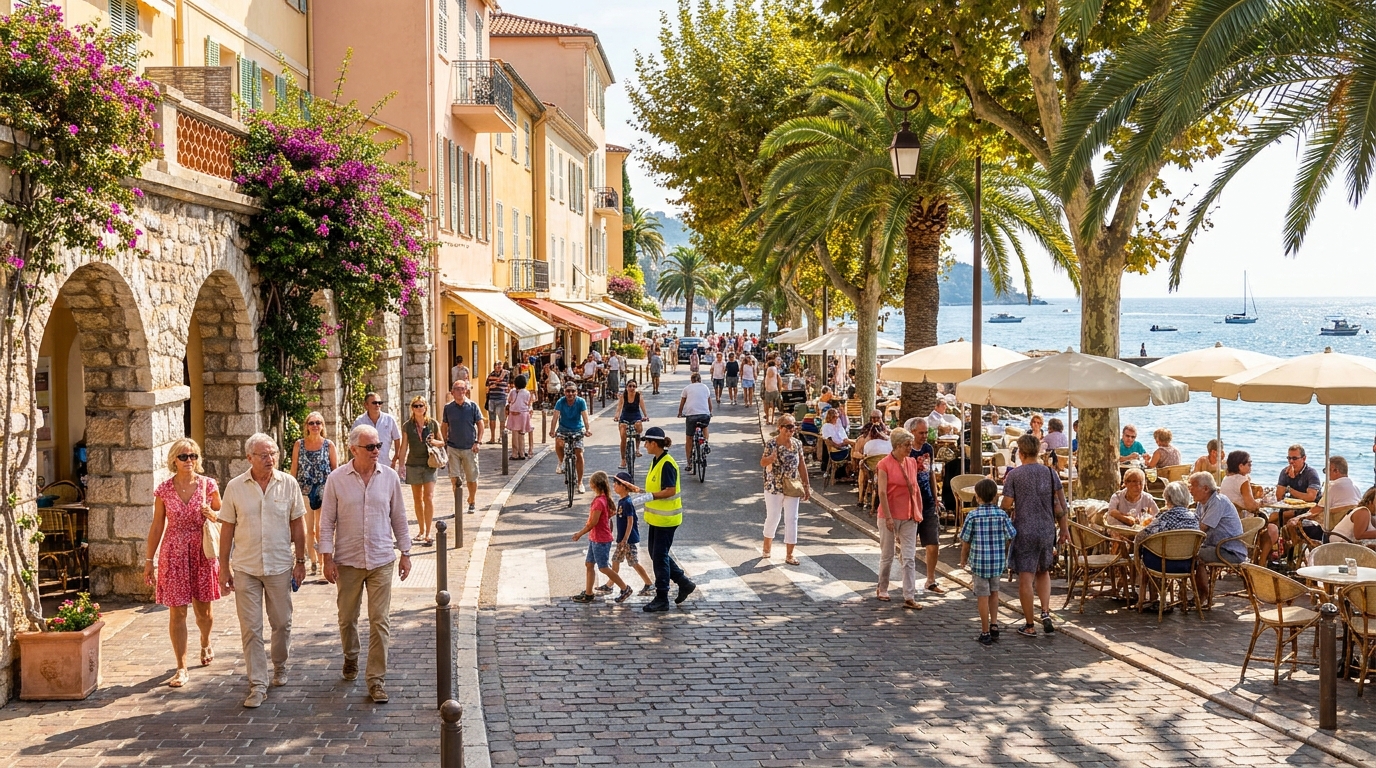
Solo travelers, whether visiting to scout a future purchase or spending a few weeks in a rental, generally describe Saint-Jean-Cap-Ferrat as one of the easiest destinations on the coast to navigate alone. The scale is human, the walking loops around the peninsula are well maintained, and public spaces stay lively into the evening without ever feeling chaotic.
Getting Around Alone
The village center, the port, and the main beaches (Paloma, Cros dei Pin, Passable) are all within a comfortable walk. Buses connect to Nice and Beaulieu-sur-Mer regularly, and taxis are available, though it is worth pre-booking in high season. Solo evenings on the port terraces are common and unremarkable.
Practical Habits Worth Keeping
The usual travel common sense applies, nothing more:
- Keep valuables out of sight in parked cars, especially near beach access points.
- Use the main coastal paths after dark rather than isolated shortcuts through wooded areas.
- Save the numbers for local taxis and the municipal police in your phone before you arrive.
- If you rent a villa, ask the owner or agent about the alarm system and emergency contacts on day one.
For Women Traveling Alone
The question deserves its own section, because it comes up often and because the honest answer matters. Women in our client base, from those spending a scouting week to those living on the cape full-time, consistently describe the village as comfortable and low-pressure.
Atmosphere and Social Codes
Street harassment, a real concern in some larger French cities, is uncommon here. The village culture leans residential and discreet, and the demographic mix skews toward families and long-term residents rather than transient nightlife. Walking home from a restaurant on the port to a rental in the village is, for most, a pleasant end to the evening rather than a source of worry.
Beaches, Trails, and Evenings Out
The coastal path around the cape, one of the most beautiful walks on the Riviera, is well trafficked during daylight hours and easy to enjoy alone. In the evening, the port and the village restaurants stay animated until a reasonable hour, and the vibe remains that of a small Mediterranean village rather than a resort strip.
→ Good to know
If you are visiting to view properties on your own, our buyer’s agent team can meet you at the train station in Beaulieu-sur-Mer and handle transport during your stay; a small detail that removes friction from a solo scouting trip.
Raising a Family on the Cape
Families relocating to Saint-Jean-Cap-Ferrat often start with the same question you are asking, and end up describing the village as one of the calmest places they have ever lived. Between the school, the parks, the beaches, and the walking distances, daily life is unusually gentle.
Schools and Daily Life
The commune has its own public primary school, and international and bilingual options are within easy reach in Nice, including Mougins School and the International School of Nice. Many families choose Saint-Jean-Cap-Ferrat precisely because they can combine a very quiet home base with access to a full international education network within a thirty-minute drive.
Everyday Environment for Children
Traffic is limited, especially inside the peninsula, and the village layout encourages walking. Children ride bikes on the port, families gather on Paloma beach on weekends, and the coastal path doubles as a playground for those long summer afternoons. The pace is closer to a village in the Var than to the busier towns just along the coast.
Healthcare Nearby
General practitioners and pharmacies are available within the village and in Beaulieu-sur-Mer, and the major hospitals of Nice and Monaco are within short reach. For families weighing a permanent move, the healthcare footprint is a real reassurance.
Community and Integration
Because the year-round population is small, integration happens quickly, often through school gates, the tennis club, sailing lessons at the port, or the small local events organized by the municipality. Families who commit to French at least at a functional level find the transition remarkably smooth.
Buying and Settling In: How Safety Shapes the Property Decision
When you are moving from “we love it” to “we are buying here”, security stops being an abstract question and starts influencing very concrete choices: which street, which type of property, which service providers. This is where local, hands-on guidance makes a genuine difference.
Comparing Property Profiles
Not every home on the cape offers the same day-to-day experience. Here is a simplified view of what most buyers weigh:
| Property type | Typical budget range | Security profile |
|---|---|---|
| Village apartment | €900,000 to €2.5M | Building access, close neighbors, walking distance to all amenities |
| Cape villa, mid-size | €4M to €10M | Private grounds, alarm systems, often within a patrolled sector |
| Waterfront estate | €15M and above | Dedicated security staff, gated access, full private monitoring |
The Purchase Process, Handled Locally
A French property purchase runs through a notaire (the public officer who authenticates real estate transactions) and begins with a compromis de vente, the preliminary sale agreement. For international buyers, the reassurance comes less from the legal framework itself, which is very structured, and more from having a team that translates every step into plain English and coordinates with the notaire, the seller’s agent, and the trades who will handle any renovation.
Where a Local Team Adds Real Value
Reading a DPE (the mandatory energy performance diagnostic), checking the règlement de copropriété for an apartment building, understanding which streets flood in a heavy autumn storm, knowing which villa on paper is actually beautifully lived in and which one needs a full rewire; none of this appears in an online listing. This is the everyday work of our on-the-ground advisors.
→ The key point
Safety on the cape is real, and the same principle applies to the buying process itself: a local, human team turns a complex transaction into a calm, structured project.
Practical Answers to the Questions Buyers Ask Us
Some concerns come up in almost every conversation. Here are the honest, grounded answers.
Is It Safe to Leave a Second Home Empty for Months?
Yes, provided the basics are in place: a monitored alarm, a trusted key holder, a gardener who visits weekly, and shutters closed on the seaward side during winter storms. Many owners rely on a property management arrangement that includes routine inspections, and our network handles this end-to-end for clients who live abroad.
What About Traffic and Road Safety?
Inside the peninsula, roads are narrow and slow. The main coastal road linking the cape to Villefranche and Beaulieu carries more traffic in summer, but speeds remain moderate. Families with young children often choose homes in the village itself precisely because school and shops are within safe walking distance.
Do I Need to Speak French?
Not to feel safe, no. English is widely understood in restaurants, shops, and professional services on the cape. That said, learning even functional French deepens integration, and it makes small everyday interactions, from the market to the school gate, warmer and easier.
Building Your Life Project on the Cape
The recurring question, is Saint-Jean-Cap-Ferrat safe, is really a doorway into a larger one: can this place be a genuine home? For solo visitors, for women traveling alone, for families relocating, and for owners returning season after season, the answer we hear consistently is yes. The village combines rare beauty with a rare kind of quiet, and its safety record reflects a community that has cared for the place for a long time.
If your next step is to see the cape with your own eyes, to compare a village apartment with a hillside villa, or to understand what a realistic budget looks like for the life you have in mind, our team is here to walk that path with you. A trusted network, the craftsmanship of local trades, and honest guidance on what each home really offers: that is what turns a beautiful idea into your French home, and a purchase abroad into a life project you can settle into with peace of mind.
Ready to explore Saint-Jean-Cap-Ferrat with a local advisor who lives on the coast? Reach out, and we will structure a discovery visit tailored to what you are actually looking for, from the first coffee on the port to the moment you hold the keys.