





UNITED KINGDOM · RIGHTMOVE
The Rightmove equivalent in France does not exist, and that is the point
Britain has one portal that everybody uses. France has five that each hold a slice, with heavy duplication and a real share of the market that reaches none of them.
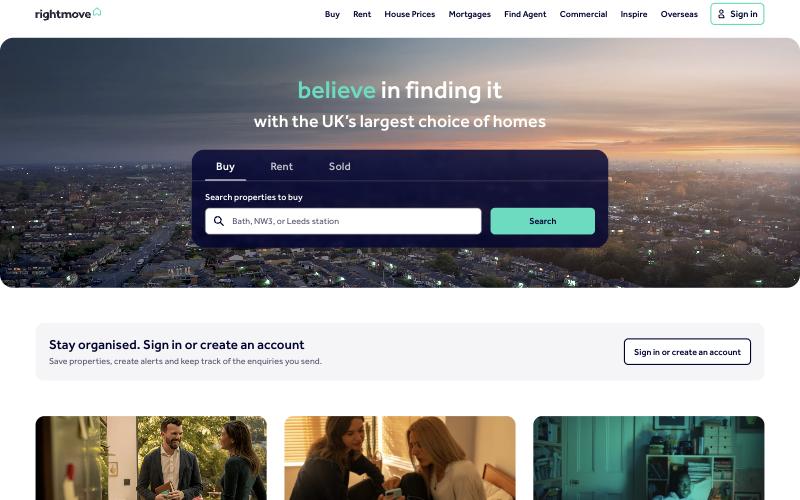
Picture this: you have spent a Sunday afternoon scrolling through French property listings, latte in hand, convinced that your future stone farmhouse in Provence is just a few clicks away. The photos are gorgeous. The prices look reasonable. And yet, when you try to understand how the French market actually works, something feels off. The platforms look different. Listings repeat themselves. Agents are harder to reach. Prices seem negotiable in ways you did not expect.
If you are used to Rightmove in the UK or Zillow in the US, searching for property in France can feel disorienting at first. There is no single dominant portal, no unified MLS, and the culture of real estate is built on relationships as much as on data. So what is the real rightmove equivalent in france, and how do you use these tools without getting lost in translation?
Understanding the French Online Property Market
France has no exact mirror of Rightmove. Instead, the online market is divided between a handful of major portals, each with its own strengths, audience and quirks. Knowing how they work, and how they fit into the broader buying process, is the first step toward a serious search.
Why there is no single dominant portal
The French real estate ecosystem is fragmented by design. Agencies are independent, local networks are strong, and a sizeable share of transactions happens between private individuals without an agent at all. That means listings are spread across several websites, and the same property can appear on three portals with three different photos, three descriptions, and sometimes three slightly different prices.
For an international buyer, this fragmentation is the single biggest source of confusion. It is also where local guidance starts to pay off.
A quick history of French property portals
Online French real estate took shape in the early 2000s, when the first classified sites moved from print to web. SeLoger, often cited as the closest rightmove equivalent in france, launched in the late 1990s and quickly became a reference for agency listings. Leboncoin arrived shortly after, bringing a very different model: free classifieds posted by owners themselves. Logic-Immo, Bien’ici and PAP followed, each carving out a niche.
Today, these platforms coexist. None of them covers the entire market, and each tells only part of the story.
Side by side
Rightmove against the five French portals, feature by feature
One British habit against five French ones. The gap is not quality, it is consolidation.
| Feature | Our buyer’s agent | Rightmove | SeLoger | Leboncoin | Bien’ici | PAP | Logic-Immo |
|---|---|---|---|---|---|---|---|
| Dominant in its market | ✘ | ✔ | ~ | ~ | ✘ | ✘ | ✘ |
| Properties for sale | ✔ | ✔ | ✔ | ✔ | ✔ | ✔ | ✔ |
| Properties to rent | ✘ | ✔ | ✔ | ✔ | ✔ | ✔ | ✔ |
| Sold price history | ✔ | ✔ | ~ | ✘ | ✘ | ✘ | ✘ |
| Saved searches and alerts | ✔ | ✔ | ✔ | ✔ | ✔ | ✔ | ✔ |
| Draw or select an area on a map | ✔ | ✔ | ~ | ~ | ✔ | ~ | ~ |
| Automated valuation | ✘ | ~ | ✔ | ✔ | ✔ | ~ | ~ |
| Agent or agency directory | ✘ | ✔ | ✔ | ✘ | ✔ | ✘ | ✔ |
| Private sellers, no agency fee | ✔ | ✘ | ~ | ✔ | ~ | ✔ | ✘ |
| Mortgage tools | ~ | ✔ | ✔ | ✘ | ~ | ~ | ~ |
| Available in English | ✔ | ✔ | ✘ | ✘ | ✘ | ✘ | ✘ |
Features checked on each site on 9 October 2026. A tilde means the feature exists in a partial or indirect form, or that we could not confirm it without an account. DVF figures: explore.data.gouv.fr, data last updated April 2026. The buyer’s agent column answers a different question from the others: not whether our site has the feature, but whether you get the result working with us. We value a property by hand, for one address, which is not the same thing as an automated estimate.
See all French real estate websites →Talk to our buyer’s agents →
The Five Main Rightmove Alternatives in France
If you want to replicate a Rightmove-style search in France, you will need to work across several sites. Here are the five that matter most, and what they are actually good for.
SeLoger: the historical reference
SeLoger is the closest thing to a national flagship portal. It aggregates listings from thousands of agencies across France, with strong coverage in Paris, Lyon, Bordeaux and the main regional cities. Filters are detailed, maps are usable, and the volume of listings is high.
Expect agency fees to be baked into prices, and expect some listings to be duplicates posted by competing agencies for the same property.
Leboncoin: the giant classifieds platform
Leboncoin is where France sells everything, from second-hand bicycles to château estates. In real estate, it is massive, with a mix of private sellers and agencies. For rural properties, maisons de village and off-the-beaten-path regions, it is often the richest source.
The interface is less polished and listings vary wildly in quality, but you will find homes here that never appear elsewhere.
Bien’ici: the map-driven newcomer
Launched by a consortium of French agencies, Bien’ici built its reputation on an elegant map interface, 3D views and immersive navigation. It is particularly useful for urban searches where neighborhood micro-location matters.
PAP (Particulier à Particulier): owner-to-owner
PAP, short for Particulier à Particulier, is dedicated to private sales with no agency involvement. Prices can be slightly lower because there is no agency commission, but the trade-off is clear: you deal directly with owners, in French, and you handle every step yourself.
Logic-Immo: agency-focused and regional
Logic-Immo complements SeLoger with strong agency coverage, often with a regional slant and clean presentation. Many buyers use it as a secondary check to make sure nothing has slipped through.
→ Good to know
Set the same search on at least three portals in parallel. If a property appears on only one of them, it is often a sign that the seller or agent is less sophisticated, which can either mean a hidden opportunity or a listing that needs serious due diligence.
Comparing the Platforms at a Glance
Each portal has a personality. The table below summarizes how they compare for an international buyer who wants to understand where to look and what to expect.
A side-by-side view
| Platform | Main strength | Who posts | Best for |
|---|---|---|---|
| SeLoger | Volume and national coverage | Agencies | Urban and suburban searches |
| Leboncoin | Private sellers, rural depth | Owners and agencies | Countryside, villages, atypical homes |
| Bien’ici | Map and 3D navigation | Agencies | City micro-locations |
| PAP | No agency commission | Private owners only | Direct deals, French-speaking buyers |
| Logic-Immo | Clean agency listings | Agencies | Regional cross-check |
What these platforms will not tell you
Portals show you what is publicly listed. They do not show you off-market properties, pocket listings held quietly by local agents, estates sold privately through notaires (the French public officers who handle every real estate transaction), or homes that are about to come to market and will sell within days.
In popular regions such as the Luberon, the Basque coast or parts of Normandy, a meaningful share of good properties never reaches a public portal at all.
The Limits of a DIY Online Search
The portals above are useful. They are not sufficient. Buying a home in France from abroad involves layers of complexity that no website will handle for you.
The language and cultural barrier
Even with excellent translation tools, nuance gets lost. A listing described as à rafraîchir can mean a weekend of painting or a full renovation. Charme de l’ancien might signal exposed beams and original tiles, or hide damp walls and failing electrics. Reading between the lines takes experience.
Phone calls, visits and negotiations happen in French, often with regional accents and local customs that shape the conversation.
The legal and administrative maze
Once you find a property, the real work begins. The compromis de vente (the preliminary sales contract), the DPE (the mandatory energy performance diagnostic), the notaire‘s role, the cooling-off period, the final deed signing: each step has its own rules, deadlines and costs. Notary fees alone typically run between seven and eight percent of the purchase price for older properties.
Add inheritance planning, tax residency questions and local urban-planning rules, and the file quickly becomes technical.
Price and value, two very different things
A listing price in France is a starting point, not a verdict. Depending on the region, the season and the seller’s situation, the margin for negotiation can range from a few percent to well over fifteen. Without local comparables and a feel for the micro-market, it is almost impossible to know if a listing is correctly priced.
→ On the ground
A property that sits online for six months is rarely a bargain waiting for you; it is usually a signal that something is off on the price, the condition, the location, or all three. A good local advisor can tell you which one in a single phone call.
Why a Buyer’s Agent Changes the Equation in France
In the US and the UK, buyer representation is standard. In France, it is still comparatively rare, and most agencies work for the seller. That gap is exactly where a dedicated buyer’s agent becomes valuable, especially for an international client managing the project remotely.
Access beyond the portals
A buyer’s agent plugged into a trusted network of local agencies, notaires, private sellers and trades sees properties before they are listed, and sometimes properties that are never listed at all. That access alone can transform your search, particularly in tight markets where the best homes move in days.
Objective advice on price and condition
Because a buyer’s agent is paid by you, not by the seller, their incentive is simple: find the right home at the right price. That means honest feedback on asking prices, realistic renovation budgets, and the courage to tell you when a property is not what the photos suggest.
What a serious property inspection covers
Before you commit, you want clarity on roof condition, structural integrity, humidity, electrics, plumbing, septic systems in rural homes, and the energy diagnostic. A buyer’s agent coordinates these checks with local experts and translates the findings into decisions you can actually make.
A single English-speaking point of contact
From the first search criteria to the final signature at the notaire‘s office, you want one team that handles every step and keeps you informed. Visits by video, negotiation strategy, legal review, bank introductions, utility transfers, keys in hand: all of it handled in English, by people who live and work in France.
A turnkey project, not just a transaction
Buying is only part of the journey. Renovation, interior design, furnishing, property management: a turnkey approach ties these threads together so that your French home is actually ready to be lived in and loved, not a stack of pending to-dos you tackle on weekends from abroad.
How to Build a Smart Search Strategy
Portals are a starting point. Treat them as such, and build a method around them.
Define your project before you scroll
Before you open a single listing, write down what you actually want. Not just a region, but a life. How many weeks a year will you spend there? Who will visit? Do you want a village with a boulangerie and a café, or complete isolation? Will you drive, cycle, take the train from Paris?
The clearer your project, the sharper your filters, and the less time you waste on homes that look charming on screen but miss your real needs.
Combine portals, agents and local sources
Use SeLoger, Leboncoin, Bien’ici, PAP and Logic-Immo in parallel. Then layer in direct contact with local agents, notaire listings (yes, notaires sell property too, through their own network), and a buyer’s agent who can surface what the portals miss.
- Save searches on each portal with email alerts
- Keep a shared spreadsheet with listing URLs, prices, strengths and concerns
- Note the agency name and ask whether a property is also listed elsewhere
- Flag any listing that has moved price down more than once
- Track time on market as a proxy for seller flexibility
Budget realistically from the start
Purchase price is only one line. Add notary fees of around seven to eight percent for older properties, agency fees if not already included, potential renovation costs, furnishing, local taxes (taxe foncière and taxe d’habitation for second homes), insurance, and ongoing maintenance. For a property listed at 450,000 euros, a realistic all-in landing cost including light refresh and furnishing can easily reach 530,000 to 560,000 euros.
→ The key point
Decide your total envelope before you fall in love with a specific house. It is the single most protective step you can take as a remote buyer, and it keeps every later decision grounded in reality.
Bringing It All Together
The French market rewards patience, method and local knowledge.
Portals are a map, not the territory
SeLoger, Leboncoin, Bien’ici, PAP and Logic-Immo will give you a solid feel for prices, regions and architectural styles. Spend time on them. Learn to read the vocabulary. Build a visual library of what you like and what you do not. But do not mistake a well-filtered search for a complete view of the market.
The human layer is where real projects happen
Behind every successful cross-border purchase, there is usually a small, patient team on the ground that knows the villages, the trades, the notaires and the rhythms of the French countryside. In an ultra-digital world, that human layer is what turns a long list of browser tabs into a home you want to walk into.
If you are weighing a life project in France, start with the portals. Then give yourself the peace of mind of a local partner who can see what the screens cannot. Your French home, and the art de vivre that comes with it, deserves that level of care.
Ready to move from browsing to building a serious search? Reach out to the FRE team and tell us about your project. We will listen first, then show you what the market really looks like from the inside.
Keep reading
The other portals we have put under the same lens
Each of these pages takes a platform international buyers already know and asks the same question: what is the French equivalent, and where does it stop being enough.
Start here
Choosing the right French property website
The ten platforms that matter in France, what each is actually good for, and how to read them.
United States
Zillow in France
No Zillow, no MLS, no Zestimate. What France has instead, including a public sales register.
United States
Realtor.com in France
Why an MLS-fed portal cannot exist here, and what replaces the Realtor experience.
Spain
Idealista France
The Spanish giant opened idealista.fr in September 2026. What it changes, and what it does not.
United States
Craigslist in France
Why classifieds never took the same shape here, and which French site plays that role.
Next step
Stop refreshing portals. Start with a brief.
Tell us the region, the budget and the life you are planning around it. We will tell you what that buys today, what the portals are not showing you, and whether we are the right team.