






Picture a slow morning on the Promenade des Anglais: the sea a flat, glittering blue, joggers weaving past couples with a coffee in hand, and a market a few blocks inland smelling of basil and warm bread. It’s the kind of scene that makes people fall for Nice and start imagining themselves living there. But before you turn a daydream into a life project, one question deserves a clear, honest answer: is Nice safe, really, for someone moving in for the long haul?
The short answer is yes, with the same nuance you’d apply to any city of roughly 350,000 people on a busy international coastline. The longer answer, the one that matters when you’re choosing a neighborhood, sending a teenager to school, or walking home from dinner in July, deserves more detail. Let’s unpack it the way a local would over a long lunch.
Understanding Safety in Nice Today
Nice is the fifth-largest city in France and the beating heart of the Côte d’Azur. Its safety profile reflects that dual identity: a Mediterranean city with a strong local fabric, and an international destination that welcomes millions of visitors a year. Both realities shape everyday life.
What the numbers actually say
Recorded crime in Nice, 2025
Nice in four safety numbers
These are the offences actually recorded by the police in the commune of Nice in 2025, set against the national average. Two things to keep in mind as you read them: they count crimes that were reported, not the ones nobody reports, and every rate is divided by the resident population, so a city with heavy visitor traffic scores higher on street theft than its residents alone would suggest.
Home burglaries
6.09per 1,000 homes
1,454 recorded in 2025
down 34% since 2016
Theft without violence
15.97per 1,000 residents
5,714 recorded in 2025
down 42% since 2016
Assault outside the home
4.92per 1,000 residents
1,761 recorded in 2025
up 19% since 2016
Vehicle theft
2.55per 1,000 residents
911 recorded in 2025
down 39% since 2016
Source: SSMSI, the statistics service of the French Ministry of the Interior, communal database of recorded crime (2025 data, published June 2026). Population and housing figures: INSEE (357,737 residents, 238,750 dwellings). Burglary is measured per 1,000 dwellings, the three other indicators per 1,000 residents.
Nice sits in the middle of the pack among large French cities for overall crime, and consistently below Paris, Marseille, and Lyon for violent offenses per capita. Most incidents recorded in the city are non-violent: pickpocketing, scooter theft, bag snatching in crowded tourist zones. Serious violent crime exists, as it does everywhere, but it is not a defining feature of daily life.
The municipality has invested heavily in public safety infrastructure over the past decade. Nice now has one of the densest networks of surveillance cameras in France, with more than 4,000 units citywide, and a municipal police force that patrols beach areas, the tramway, and the old town on foot and by bike. Whatever you think of camera density as a policy, the practical effect for residents is a visible, consistent police presence.
How things have evolved
Ask longtime residents and you’ll hear a consistent story. Petty theft has always followed the tourist calendar, spiking between May and September. What has changed is how the city responds: faster patrols on the Promenade, clearer coordination between municipal and national police, better lighting in transit hubs, and a real effort to keep the tramway lines calm and orderly late into the evening.
Neighborhood dynamics shift, too. Areas that once felt sleepy have gentrified; others have quieted down as families moved in. Safety in a city is never static, and Nice is no exception.
→ Good to know
When you visit a neighborhood before buying, walk it twice: once at 11 a.m., once at 10 p.m. The same street can feel entirely different, and that second walk tells you what you actually need to know.
Neighborhood by Neighborhood: Where People Actually Live
“Is Nice safe?” is really a question about specific streets. The city is a mosaic of very distinct quartiers, each with its own rhythm, price range, and feel. Understanding those differences is where local, on-the-ground guidance changes everything.
The quieter, family-friendly quartiers
Cimiez, perched above the city, is the classic choice for families and long-term expats. Wide streets, Belle Époque buildings, the Matisse Museum, Roman ruins, and a genuinely calm evening atmosphere. Budget-wise, expect roughly 5,500 to 7,500 euros per square meter for a well-kept apartment.
Mont Boron and Fabron offer sea views and a suburban feel while remaining within the city. Le Port, once industrial, is now one of the most sought-after areas for design-minded buyers, with cafés, galleries, and a strong sense of community. Carré d’Or, the elegant grid between the Promenade and the Jardin Albert 1er, is the safest central bet if you want to walk everywhere and prefer stately Haussmannian buildings.
The lively, mixed-use areas
Vieux Nice, the old town, is spectacular by day and lively by night. Families do live there, and many love it, but you’ll want to be honest about noise, foot traffic, and the summer crowds. The streets are narrow, the tourists many, and the terraces open late.
Around Place Masséna and the main train station (Gare Thiers), the atmosphere is more transient. It isn’t dangerous in any dramatic sense, but the immediate perimeter of the station is not where most residents choose to settle.
Areas that call for closer local reading
Certain pockets of Nice Nord and the western edges of the city have a reputation that varies street by street. Some are perfectly pleasant residential streets; others are worth a longer conversation with someone who knows the block. This is exactly the kind of nuance that a listings site cannot convey, and where a real advisor earns their keep.
Is Nice Safe for Solo Travelers and New Arrivals?
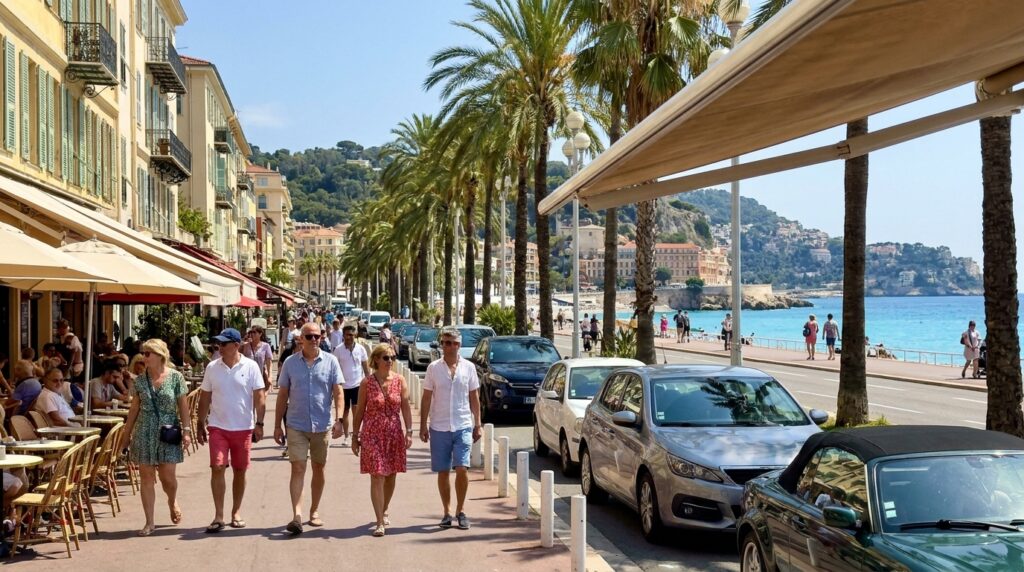
For solo movers, whether you’re relocating for work, retiring, or simply starting a new chapter, Nice ranks among the more approachable cities in France. English is widely spoken in central neighborhoods, the expat community is large and well organized, and the compact scale of the city means you rarely feel isolated.
Getting around after dark
The tramway runs until around 1:30 a.m. on weekends and is generally calm. Taxis and ride-hailing apps work well. Walking home in Carré d’Or, Le Port, or Cimiez at a reasonable hour is unremarkable for most residents. As in any Mediterranean city, common sense applies: stay on lit streets, keep your phone out of sight in dense crowds, and be a little more alert on festival nights.
Practical habits that pay off
- Carry a slim wallet or a zipped crossbody in the old town and on the tramway.
- Register with your consulate once you’ve settled in.
- Save the numbers 17 (police), 15 (medical), and 112 (European emergency) in your phone.
- Choose a building with a working digicode (keypad entry) and, ideally, a gardien (live-in caretaker) if you want an extra layer of daily presence.
Is Nice Safe for Women and Female Solo Residents?
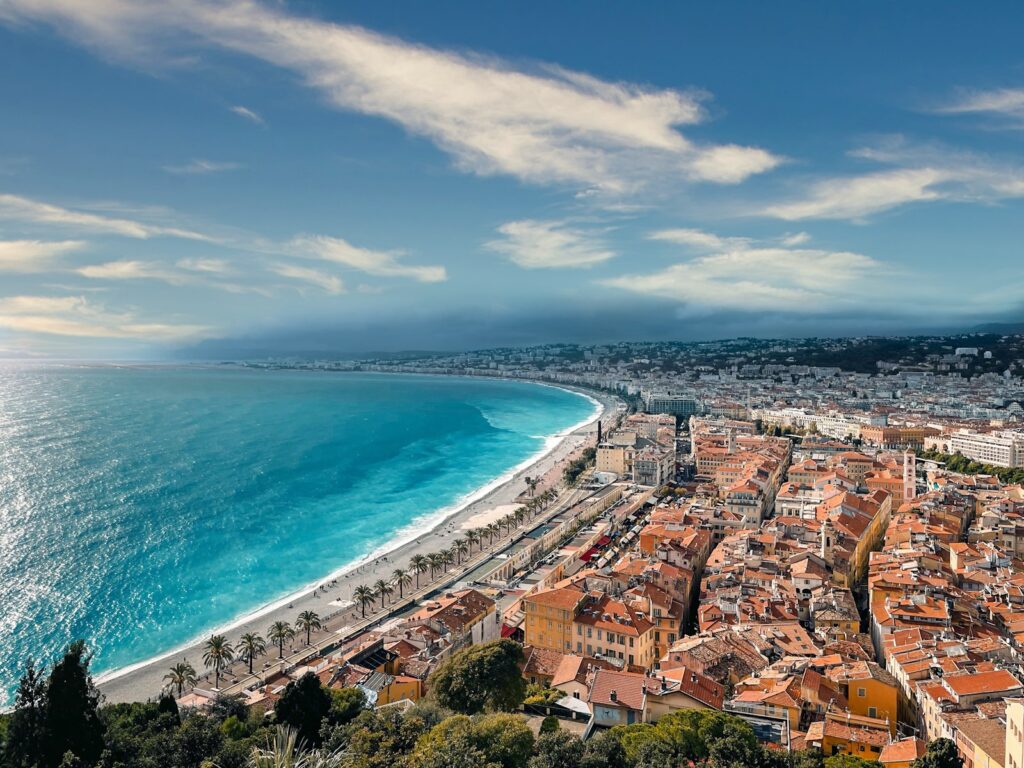
This question deserves a candid answer, because generic reassurance helps no one. Overall, women who live in Nice describe daily life as comfortable and free. Walking to the market, taking the tram, running along the Promenade at sunrise, sitting on a café terrace alone, all of this is entirely normal and widely done.
What to expect in practice
Street harassment exists, as in most large cities, and tends to concentrate around certain nightlife strips and near the main train station late at night. It is not a dominant feature of the city, and residential neighborhoods like Cimiez, Carré d’Or, Le Port, and Mont Boron feel calm well into the evening.
Female clients often tell us the biggest adjustment isn’t safety but sociability: how quickly you build a network. Nice makes that easier than most cities its size, with a dense expat scene, sports clubs, art associations, and language exchanges that meet weekly.
Choosing the right building
For solo female residents in particular, the building itself matters as much as the neighborhood. A well-maintained copropriété (co-owned residence) with a working elevator, secure entry, and engaged neighbors changes daily life. When you visit an apartment, ask about the syndic (the building’s management), look at the condition of the entrance hall, and check whether ground-floor windows have proper shutters.
→ On the ground
Before you sign a compromis de vente (preliminary sales agreement), ask to see the last three years of building meeting minutes. They quietly reveal how the building actually functions and who your neighbors will be.
Is Nice Safe for Families Moving In?
Families are the demographic that most often surprises new arrivals. Nice has excellent public parks, a strong network of schools, a walkable center, and a beach that turns into a giant playground on weekends. The city is genuinely built for family life, not just tourism.
Schools, activities, and daily rhythm
Nice offers French public schools, bilingual public sections, and several international options, including the International School of Nice and the CIV in nearby Valbonne. Sports clubs, sailing schools, tennis academies, and music conservatories are abundant and reasonably priced compared to what most American families are used to.
Choosing the right neighborhood for children
Cimiez, Gairaut, Saint-Roman-de-Bellet, and parts of Fabron are the traditional family choices, with houses, gardens, and quiet streets. Closer to the center, the streets around the Promenade du Paillon and Carré d’Or work well for families who prefer apartment living and want to walk to everything.
A quick comparison of family-friendly options
| Neighborhood | Style | Approx. price / m² | Best for |
|---|---|---|---|
| Cimiez | Elegant apartments, some villas | 5,500 to 7,500 € | Families wanting calm and prestige |
| Mont Boron | Sea-view villas, quiet streets | 7,000 to 12,000 € | Buyers seeking privacy and views |
| Carré d’Or | Haussmannian apartments | 6,500 to 9,000 € | Walkable urban family life |
| Fabron | Residential, mixed housing | 4,500 to 6,500 € | Value-conscious families |
| Le Port | Design-forward, artsy | 6,000 to 8,500 € | Creative families, small children |
Healthcare and everyday services
Healthcare in Nice is excellent. The city has multiple hospitals, including the CHU de Nice, and a dense network of private specialists. Once you’re a resident, the French system offers reimbursed care that most American families find both high-quality and refreshingly affordable. Pharmacies are everywhere and a genuinely useful first stop for minor concerns.
Practical Steps for Assessing Safety Before You Buy
Choosing where to live is not the same as choosing where to vacation. The lens shifts. What felt charming for a weekend can wear thin over a year, and what looked ordinary at first glance can turn out to be exactly right for daily life.
Do your own on-the-ground homework
If you can, visit in two different seasons: one summer week and one week between November and March. You’ll see how the neighborhood breathes when the tourists leave. Talk to shopkeepers, the local boulanger, the pharmacist. They will tell you more in ten minutes than any brochure.
Read the fine print of the building
A safe street with a poorly run building is not a safe home. Ask about:
- The condition of the entry system and common areas.
- The financial health of the copropriété.
- Any planned major works (travaux) that could affect security or living conditions.
- The building’s DPE (energy performance certificate), which also hints at overall maintenance quality.
Work with people who live where you’re buying
A local advisor doesn’t just show you apartments. They tell you which side of the boulevard is quieter, which staircase in a building has the light problem, and which notaire in town is known for closing cleanly. That kind of clarity is what turns a purchase into peace of mind.
→ The key point
The safest home in Nice is rarely the one with the biggest terrace or the best view. It’s the one whose street, building, and neighbors quietly work in your favor every day.
The Bigger Picture: Nice as a Life Project
Safety is one lens, but it’s rarely the only one that matters when you’re building a life somewhere. Buyers who thrive in Nice tend to see the city as a full art de vivre proposition: markets, sea, mountains within an hour, a rich cultural calendar, and a food scene that rewards curiosity.
What makes a move successful
The clients who settle in most easily share a few habits. They learn basic French, even if their neighborhood is bilingual. They join something, a club, a class, a volunteer association. They resist the temptation to compare Nice to New York, London, or Los Angeles, and instead let the city set its own pace.
The value of a trusted network
Buying property in France involves layers that don’t exist elsewhere: the compromis, the cooling-off period, the notaire‘s role, the specific tax rules for non-resident and resident buyers. Handled well, it is a smooth, well-defined process. Handled without local support, it is where surprises happen.
Our buyer’s agent team lives and works in France year-round. When you ask us “is Nice safe for my family?” or “is this street right for us?”, the answer comes from people who walk those neighborhoods and know the buildings on them. That’s the difference between browsing listings and building a French home.
Bringing It All Together
So, is Nice safe? For most people who move in with open eyes, clear expectations, and the right neighborhood, yes, comfortably so. The city has invested seriously in public safety, its violent crime remains lower than in France’s other large metropolises, and its neighborhoods offer a genuine range of atmospheres for solo residents, women moving on their own, and families building a long-term base.
What matters most is not whether Nice is safe in the abstract, but whether the specific street, building, and rhythm of life you choose fit who you are. That’s a conversation worth having with people who live here, and it’s the conversation we love having with buyers who are ready to turn a coastal daydream into their French home. When you’re ready to explore, we’re on the ground, ready to walk those streets with you.