





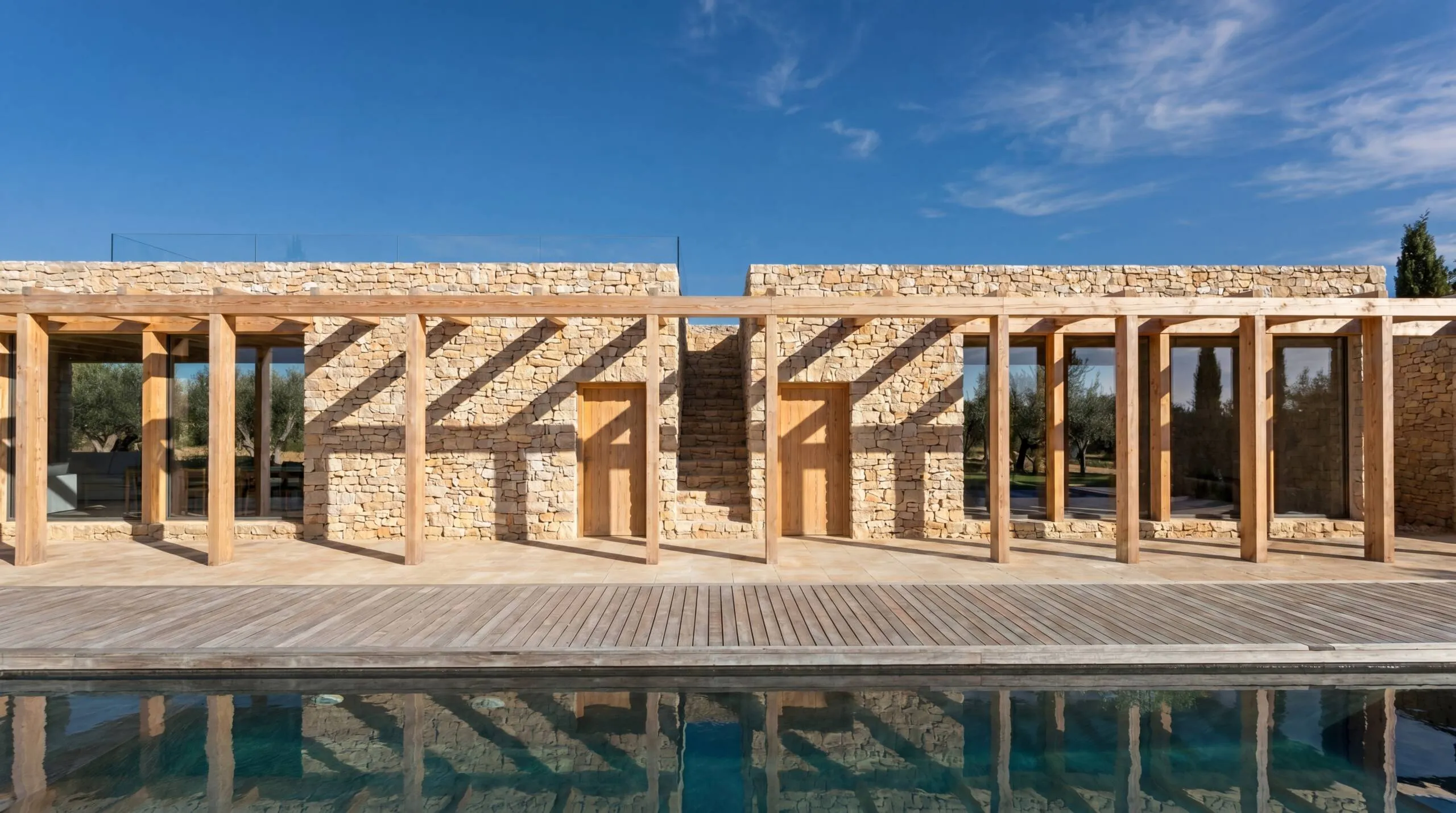

Picture yourself walking a parcel of land in the Luberon, measuring the sun’s path across a future terrace, and asking the only question that really matters: can you actually make this happen from Chicago, Austin, or Boston? The short answer is yes. The longer answer, the one that saves you from costly surprises, involves understanding how French construction works, what it truly costs, and how the timeline unfolds when you are running the project from six time zones away.
Building in France is not a transplanted American experience. It follows its own rules, its own rhythm, and its own craftsmanship. With the right local team on the ground, it becomes one of the most rewarding paths to your French home.
Can an American build a house in France?
France places no nationality restriction on land or home ownership. You can buy a parcel, commission an architect, hire builders, and hold the finished property in your own name, exactly as a French citizen would. What changes for you as an American is not the right to build, but the practical choreography around it.
What ownership actually gives you
Full freehold ownership in France is called pleine propriété, and once the notaire (the state-appointed public officer who authenticates every property transaction) records the deed, the land is yours. You can build on it, sell it, pass it to your children, or rent it out, subject to local planning rules. Ownership does not depend on how often you set foot in France, nor on holding a visa.
The residency nuance
Owning French property does not grant you residency, and residency is not required to own. If you plan to spend more than ninety days at a stretch in your French home, you will want to look at a long-stay visa separately. Many of our American clients build a second home first, then explore residency once the house is finished and life in France has settled into a rhythm.
How long does it take to build a house in France?
The honest answer, from first site visit to key handover, is eighteen to thirty months. Shorter promises exist. They rarely survive contact with a French building site.
From first visit to permit
Finding the land, signing the compromis de vente (the binding preliminary sales contract), closing with the notaire, selecting an architect, and securing the permis de construire (building permit) typically runs six to ten months. The permit itself takes two to three months to be instructed by the mairie, plus a mandatory two-month public display period during which neighbors can raise objections.
From groundbreaking to handover
Construction itself usually spans twelve to eighteen months for a well-built single-family home of 150 to 200 square meters. Weather matters. So does the availability of skilled trades in regions like Provence or the Dordogne, where good artisans are booked months in advance.
Why 18 to 30 months is the honest number
Add it up and you land squarely in the eighteen-to-thirty-month window. Faster is possible on a prefabricated model with a cleared, serviced lot. Slower is common on heritage parcels, hillside builds, or any project involving the Architecte des Bâtiments de France (the state architect who oversees protected zones). Treat the longer end as your working assumption and anything shorter becomes a happy surprise.
→ The FRE insight
Build your financial plan around twenty-four months of carrying costs, not twelve. The clients who sleep well at night are the ones who budgeted the timeline honestly from the start.
The five stages of a French build
Every French construction project moves through the same five phases, each with its own pace, its own paperwork, and its own professionals. Knowing the sequence helps you anticipate decisions rather than react to them.
Land search and acquisition
This is where most American projects either take root or quietly drift. The right parcel satisfies three constraints at once: your lifestyle, the local Plan Local d’Urbanisme (the municipal zoning plan), and your budget once connection fees for water, electricity, and sewage are included. A parcel that looks affordable can carry twenty to forty thousand euros of viabilisation (utility connection) costs that only reveal themselves on inspection. If you are still weighing regions, our overview of properties for sale across France is a useful starting point to calibrate location before you commit to a plot.
Architect, design, and permit
Any build over 150 square meters legally requires an architecte DPLG. Below that threshold, an architect is still strongly recommended. Fees usually run eight to twelve percent of the construction budget and cover design, permit filing, and site supervision. This is where your vision becomes drawings, and drawings become a permit stamped at the mairie.
Trades, quotes, and contracts
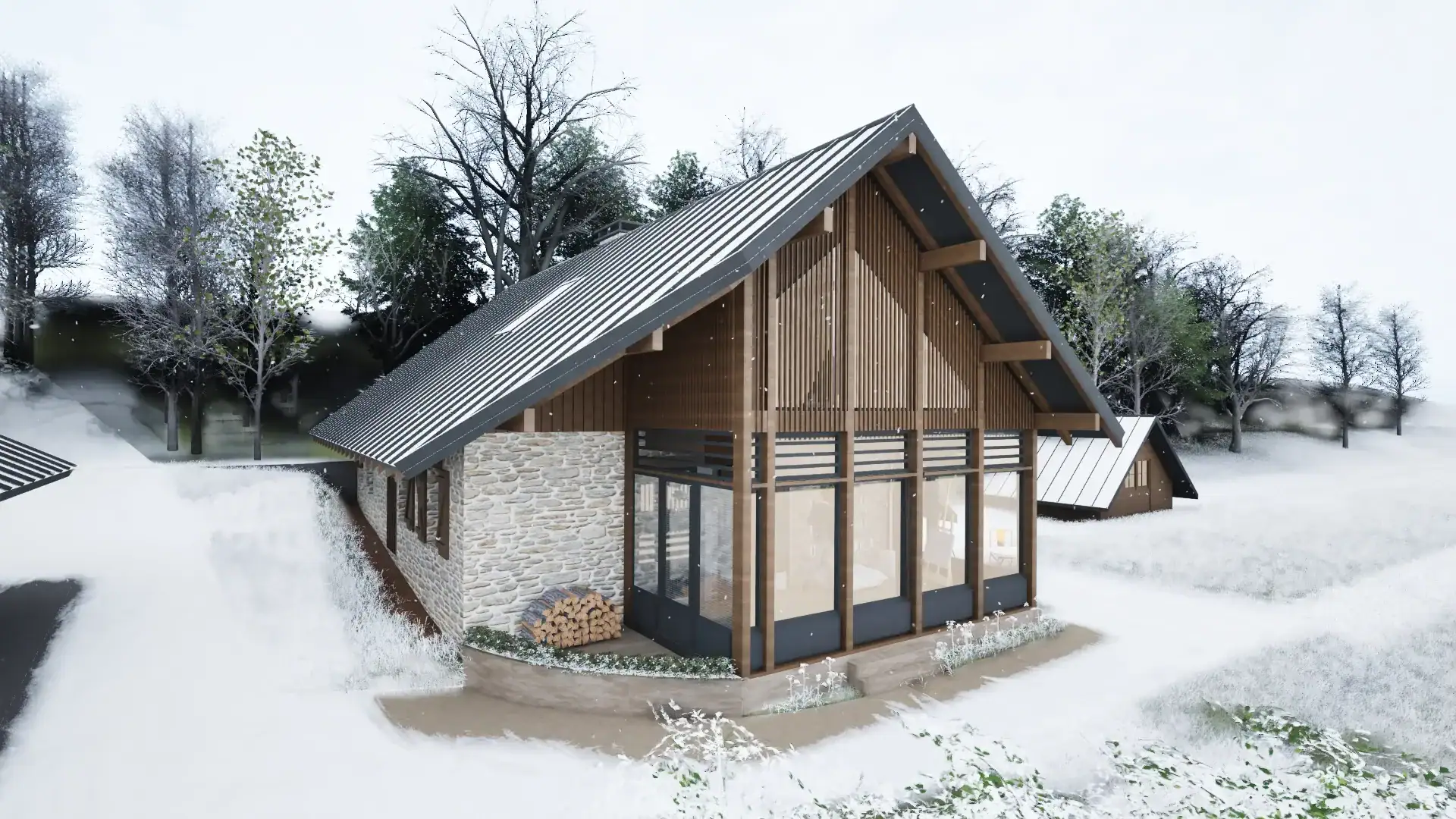
You will either sign a contrat de construction de maison individuelle (a regulated turnkey builder contract with price and delivery guarantees) or coordinate individual trades through a maître d’œuvre (project manager). Each path has its logic. The first offers price certainty; the second offers flexibility and often higher craftsmanship on a bespoke home.
Construction and site management
Expect monthly site meetings, staged payments tied to construction milestones, and a rhythm set by the French calendar. August slows everything down. So does the long holiday stretch around the end of the year. Having someone on the ground who speaks the trades’ language, both literally and culturally, is what keeps the project moving.
Handover and the first year
The réception des travaux is the formal handover. You walk the house with the builder, note any reserves, and the ten-year structural guarantee (garantie décennale) begins. For the first year, a one-year guarantee covers finishes; for two years, equipment; for ten, structural work. Few countries offer a buyer this depth of post-build protection.
Should you build or renovate in France?
It is the question every American buyer asks us, and the answer depends less on taste than on the numbers once VAT, energy standards, and resale value all enter the picture.
The case for building new, and RE2020
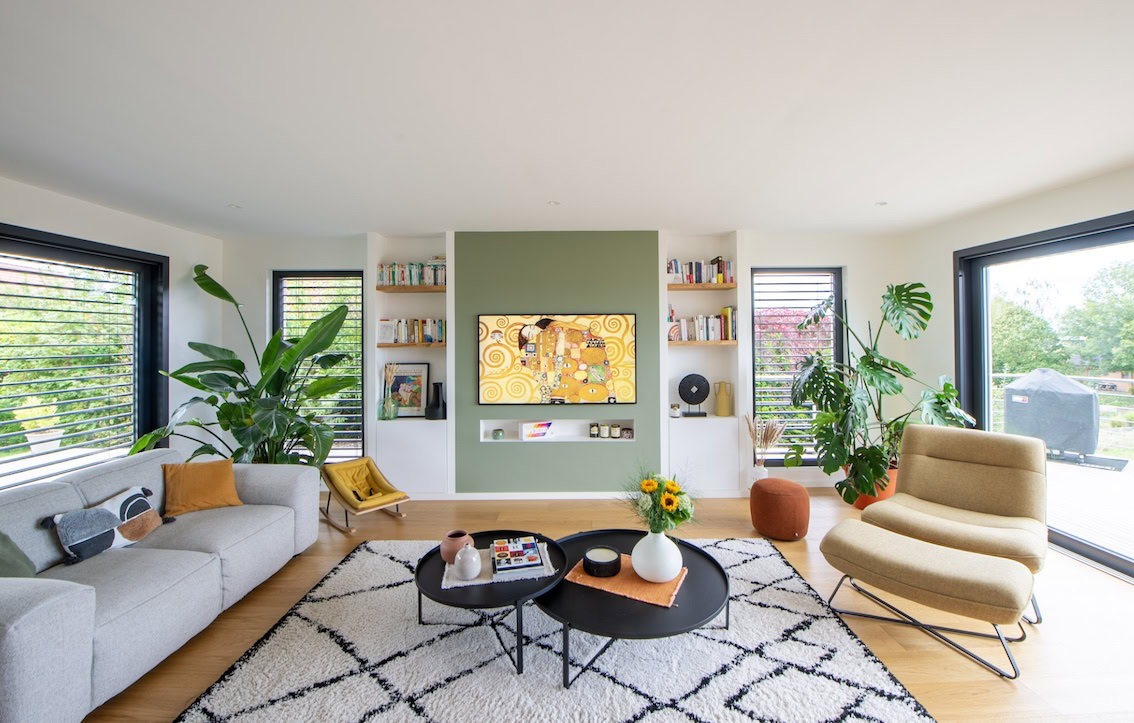
A new build in France must comply with RE2020, the environmental regulation that governs insulation, heating, carbon footprint, and renewable integration. The result: a house that runs on remarkably low energy, qualifies for the top DPE (energy performance certificate) rating, and holds its value as European energy rules tighten. No surprises on heating bills. No retrofitting to fear.
The case for renovating
A stone farmhouse in Provence or a maison de maître in the Dordogne offers something a new build cannot: patina, proportions, and a story. Renovation lets you preserve a piece of French heritage, often in villages where new construction is simply not permitted. The craftsmanship involved, from enduit à la chaux (lime render) to reclaimed terracotta floors, is where French art de vivre truly lives.
How the numbers compare once VAT is included
Here is where many American buyers are initially surprised. New construction in France carries a twenty percent VAT, embedded in the final price. Renovation on a home more than two years old benefits from a reduced ten percent VAT, and certain energy-efficiency works qualify for five and a half percent.
| Project type | Typical all-in cost (€/m²) | VAT rate | Timeline |
|---|---|---|---|
| New build (RE2020) | 2,200 to 3,500 | 20% | 18 to 30 months |
| Full renovation | 1,800 to 3,000 | 10% | 12 to 24 months |
| Energy retrofit only | 800 to 1,500 | 5.5% | 6 to 12 months |
So the real Cost of Building a House in France is often closer to renovation than headline comparisons suggest, once VAT and energy performance are factored in. On a 180 square meter home, the gap can narrow to fifty or sixty thousand euros, which is a meaningful but not decisive difference against the full life-project equation.
How do Americans finance a build in France?
Financing a French build from the United States is entirely workable, but it follows French banking logic, not American. Expect more paperwork, more conservatism, and more protection for you as the borrower.
French mortgages for non-residents
Non-resident mortgages typically finance sixty to seventy percent of the project, with the balance paid from your own funds. French banks lend on fixed rates, over fifteen to twenty-five years, and will want to see your American income, assets, and debt ratios translated into their framework. The underwriting is thorough. The upside is a fixed rate that stays fixed for the entire loan.
The ten-day reflection period you cannot waive
French mortgage law hands you a mandatory ten-day cooling-off period after you receive the formal loan offer. You cannot sign before day eleven. You cannot waive it. It exists to protect you, and it is one of several consumer protections that make French property finance notably borrower-friendly.
Earning in dollars, building in euros
Currency is the quiet variable. A ten percent move between the dollar and the euro over a twenty-four-month build can shift your effective budget by tens of thousands. Many American clients hedge by converting funds in tranches, aligned with construction milestones, or by using a specialist currency service rather than a retail bank wire. Your notaire will accept funds from a French account; opening one early simplifies every payment that follows.
→ Good to know
Open your French bank account before you sign the compromis de vente, not after. It takes longer than you expect, and every subsequent payment to builders, utilities, and the notaire flows through it.
Bringing it all together
Building a house in France is a life project, not a transaction. It rewards patience, precision, and a trusted network of people who know the land, the trades, the mairie, and the quiet rhythms of French construction. The regulations exist to protect you. The timelines exist because craftsmanship takes time. The costs reflect a system where guarantees run for a decade and where every trade is insured.
For an American buyer, the ingredients of a successful build are consistent: honest land due diligence, a clear-eyed budget that includes VAT and connection fees, a financing plan that respects French banking rhythm, and a team on the ground who can walk the site when you cannot. Done right, you end up with more than a house. You end up with a home that fits a French way of life, held to standards that will still matter decades from now.
If you are weighing a build against a renovation, or simply trying to understand what the real Cost of Building a House in France would be for your specific project, that conversation is exactly where we start. One parcel, one village, one family at a time, with the clarity and peace of mind that come from having a local partner alongside you.
The hidden line items in your construction budget
Headline price-per-square-meter figures tell only part of the story. The clients who finish a build on budget are the ones who understood, from day one, that construction cost excluding land is not the same as total project cost. Between the two sit a dozen line items that quietly add fifteen to twenty-five percent to the final invoice.
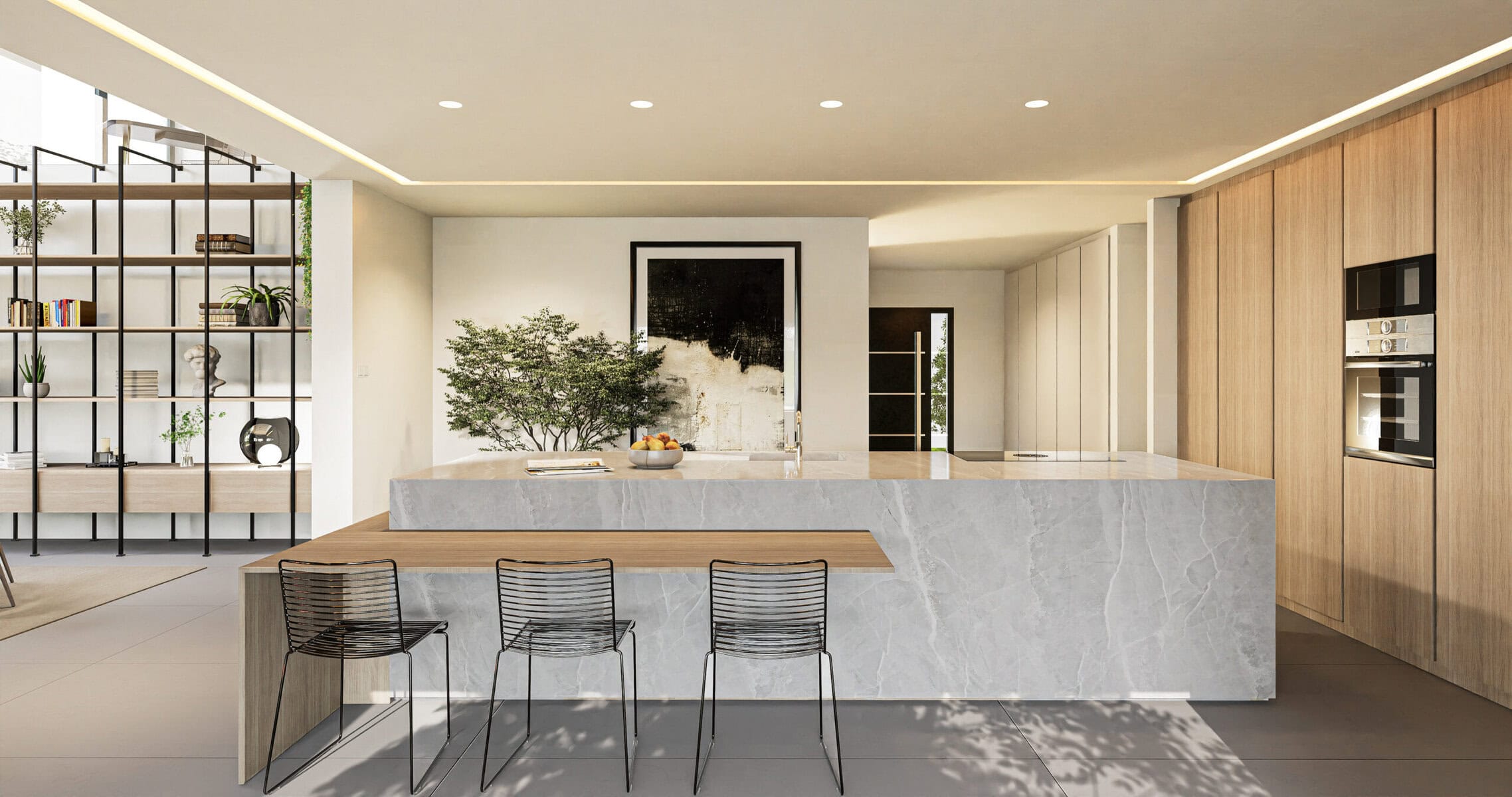
The usual suspects: viabilisation (water, electricity, sewage, telecom connections) at twenty to forty thousand euros, the mandatory étude de sol G1/G2 (geotechnical soil study) at fifteen hundred to three thousand euros, the taxe d’aménagement (development tax paid to the mairie), the assurance dommages-ouvrage (ten-year structural damage insurance) at two to four percent of construction cost, the kitchen (almost never included in builder quotes), landscaping, fencing, and the pool if you want one. Add notaire fees on the land purchase, roughly seven to eight percent on raw land, and the picture clarifies. For a sense of the upper tier, our note on buying and restoring a château gives useful perspective on how renovation and heritage projects scale.
The three ways to actually get the house built
There is no single way to build in France. The route you choose shapes your budget, your timeline, and how much of your energy the project will absorb. Three models dominate, each with its own personality.
The developer and the lotissement
Large developers buy serviced plots in a lotissement (a planned residential subdivision) and offer a catalog of house models. You pick a design, make a few finish choices, and receive the keys on handover day. Prices are predictable, utilities are already in place, and the paperwork is streamlined. The trade-off is uniformity and close neighbors, which may or may not match the French home you had in mind.
The individual builder under CCMI
A regional house builder working under a contrat de construction de maison individuelle gives you a fixed price, a guaranteed delivery date, and staged payments (typically fifteen percent at groundbreaking, twenty-five percent at foundations, further tranches at structural milestones, and five percent at réception). You choose from the builder’s plans or sketch your own layout. Once signed, changes get expensive quickly, so the design phase is where you invest your attention.
The architect-led bespoke build
For a true one-of-a-kind home, an architecte DPLG coordinates the design and either supervises trades directly or works with a maître d’œuvre. This is where craftsmanship, site specificity, and architectural ambition come together. Costs run higher, often three thousand euros per square meter and up, and the timeline stretches, but the result is a house shaped around your land, your light, and your life.
Why the étude de sol is the smartest money you’ll spend
Before a single trench is dug, French regulation requires a geotechnical study of your land. The étude de sol G1 is mandatory at the land sale stage in zones exposed to clay-shrinkage risk; the G2 goes further and informs the foundation design itself. Together they cost between fifteen hundred and three thousand euros, a rounding error on a five-hundred-thousand-euro project.
Why does it matter so much? Because the topography and geology of your parcel dictate not only what you can build, but how. Without a proper soil study, architects and builders default to conservative, deeper, more expensive foundations to protect themselves. With the study in hand, foundations can be engineered precisely, sometimes saving far more than the study itself cost, and almost always preventing the cracks and settlement that haunt under-studied builds five or ten years down the line.
→ The key point
Spend the money on preparation, not on repairs. A thorough étude de sol and a detailed design phase are the two investments that pay for themselves many times over.
FAQ
The questions American buyers ask us most often, answered with the clarity we would give a client sitting across the table.
Can I build my own house in France?
Yes, nothing stops you from acting as your own maître d’ouvrage. But building outside a regulated builder contract means giving up the completion guarantee and the fixed delivery date that come with it, and taking personal responsibility for the ten-year insurance. Most buyers running a project from abroad choose the protected route for exactly that reason.
Can Americans own property in France?
Yes, with no restriction tied to nationality or residency. You can hold property in your own name, jointly, or through an SCI (a French property-holding company). The purchase runs through a notaire, with the same taxes and the same legal protections a French buyer gets. Our guide to buying building land in France covers the plot-specific checks.
Does buying property in France give you residency?
No. Owning a house or a plot of land in France creates no right of residence and no visa. You can stay up to ninety days in any one-hundred-and-eighty-day period as a visitor. Beyond that, you need a long-stay visa, which is a separate application with its own income and insurance conditions.
How long does it take to build a house in France?
Count eighteen to thirty months from the day you first walk a parcel to the day you turn the key, and closer to three years for an architect-designed house with bespoke materials. Planning permission alone takes two to three months, plus a two-month window during which neighbours can contest the permit.
What are the major construction companies in France?
At national scale, Bouygues Construction, Vinci and Eiffage dominate large infrastructure. Individual houses are built mostly by regional constructeurs de maisons individuelles and by independent architects working with local trades. For a bespoke build, a regional architect with a vetted team of craftsmen is almost always the better answer, as our projects show.
→ On the ground
Whichever route you take, the one decision that shapes every other is the plot. Get the land checks and the permit right, and the rest of the project becomes a matter of execution. That is where a bilingual team on the ground earns its keep.