





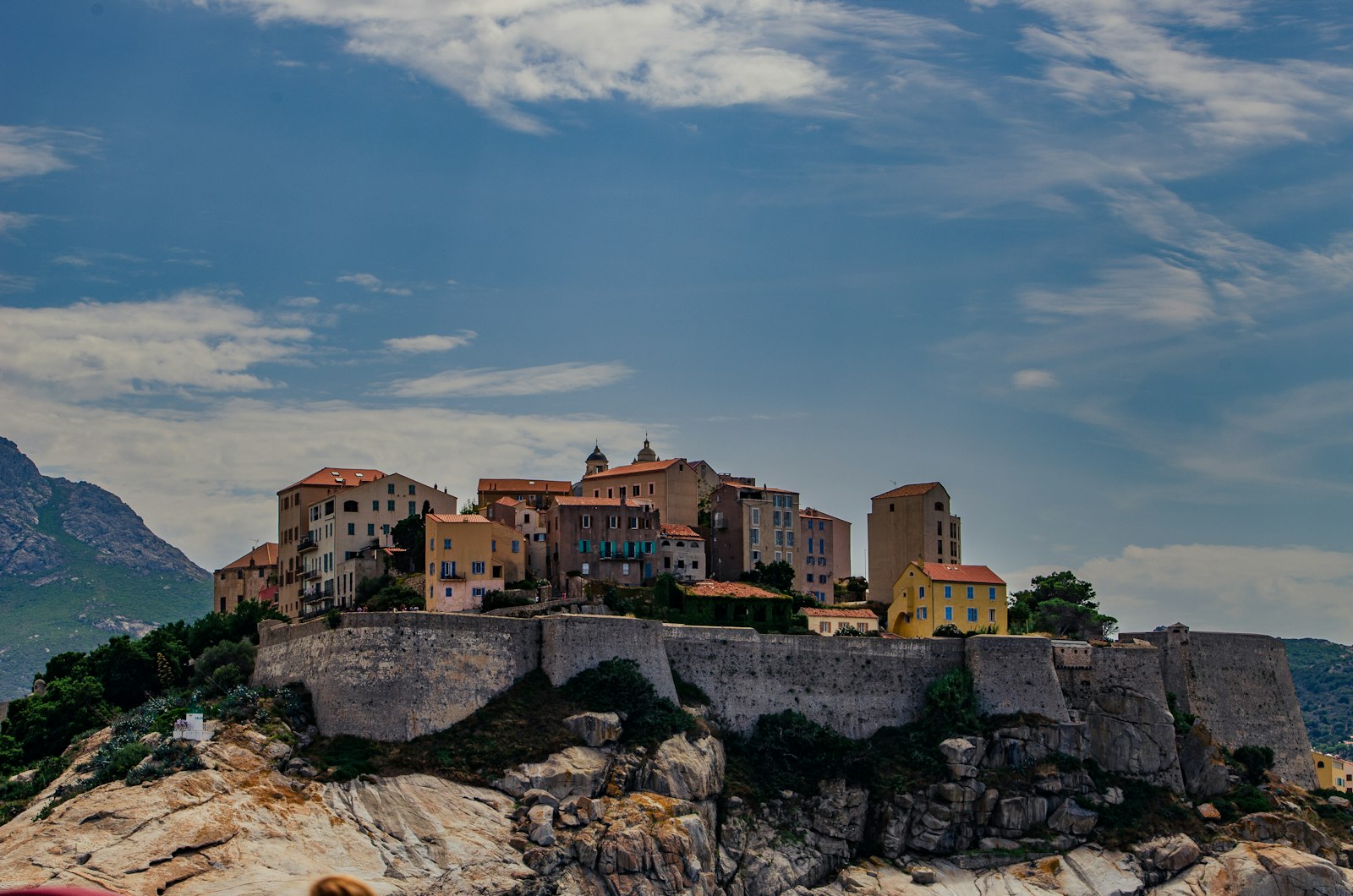
Corsica Region: will you fall in love?
Picture an island where 1,000 kilometers of coastline meet peaks rising above 2,700 meters, where villages perched on granite ridges still speak their own language, and where the sea shifts from turquoise to deep sapphire within the same cove. This is Corsica, the French island the Greeks once called Kalliste, “the most beautiful.” For international buyers looking beyond the Riviera or Provence, few French destinations offer such a concentrated blend of nature, culture, and quiet exclusivity.
Corsica remains one of the least densely populated regions of France, a fact that shapes everything: the pace of life, the untouched landscapes, the tight-knit communities. It is a place where a home is not simply a property, but an entry point into a very particular way of living.
An Island Identity Rooted in Geography and History
Sitting in the western Mediterranean, about 170 kilometers south of the French Riviera and just 12 kilometers north of Sardinia, Corsica has always been a crossroads. That position, at once French, Italian in influence, and profoundly its own, gives the island a personality unlike any other in France.
A Geography of Contrasts
Corsica is often described as “a mountain in the sea,” and rightly so. Roughly two-thirds of its 8,680 square kilometers are covered by mountains, with Monte Cinto peaking at 2,706 meters. The coastline unfolds into more than 200 beaches, from the fine white sand of Palombaggia to the red porphyry cliffs of the Calanques de Piana, a UNESCO World Heritage site.
Inland, the maquis, that dense, aromatic scrubland of myrtle, rockrose and immortelle, perfumes the air for miles. Chestnut and pine forests carpet the mountains, most famously the Laricio pines of the Aïtone forest, some of them centuries old.
A Layered History
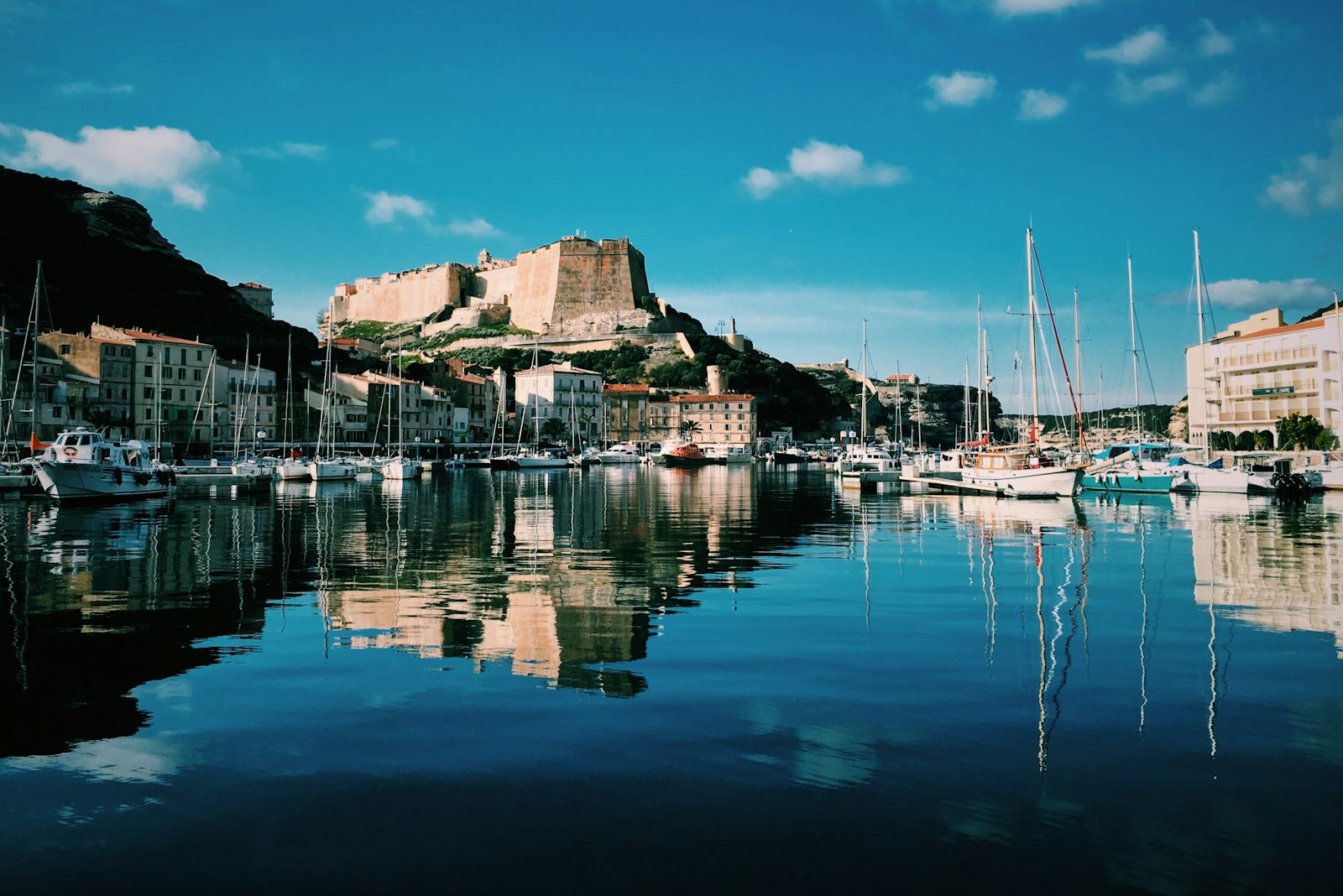
The island has been shaped by Genoese watchtowers, Pisan chapels, Napoleonic memory (Napoleon was born in Ajaccio), and centuries of quiet resistance. Every village tells a story: fortified citadels in Bonifacio and Calvi, Romanesque churches in the Nebbio, and countless hameaux (small hamlets) clinging to the hillsides. The Corsican language, u corsu, is still spoken and taught, alive in street names, songs and everyday conversation.
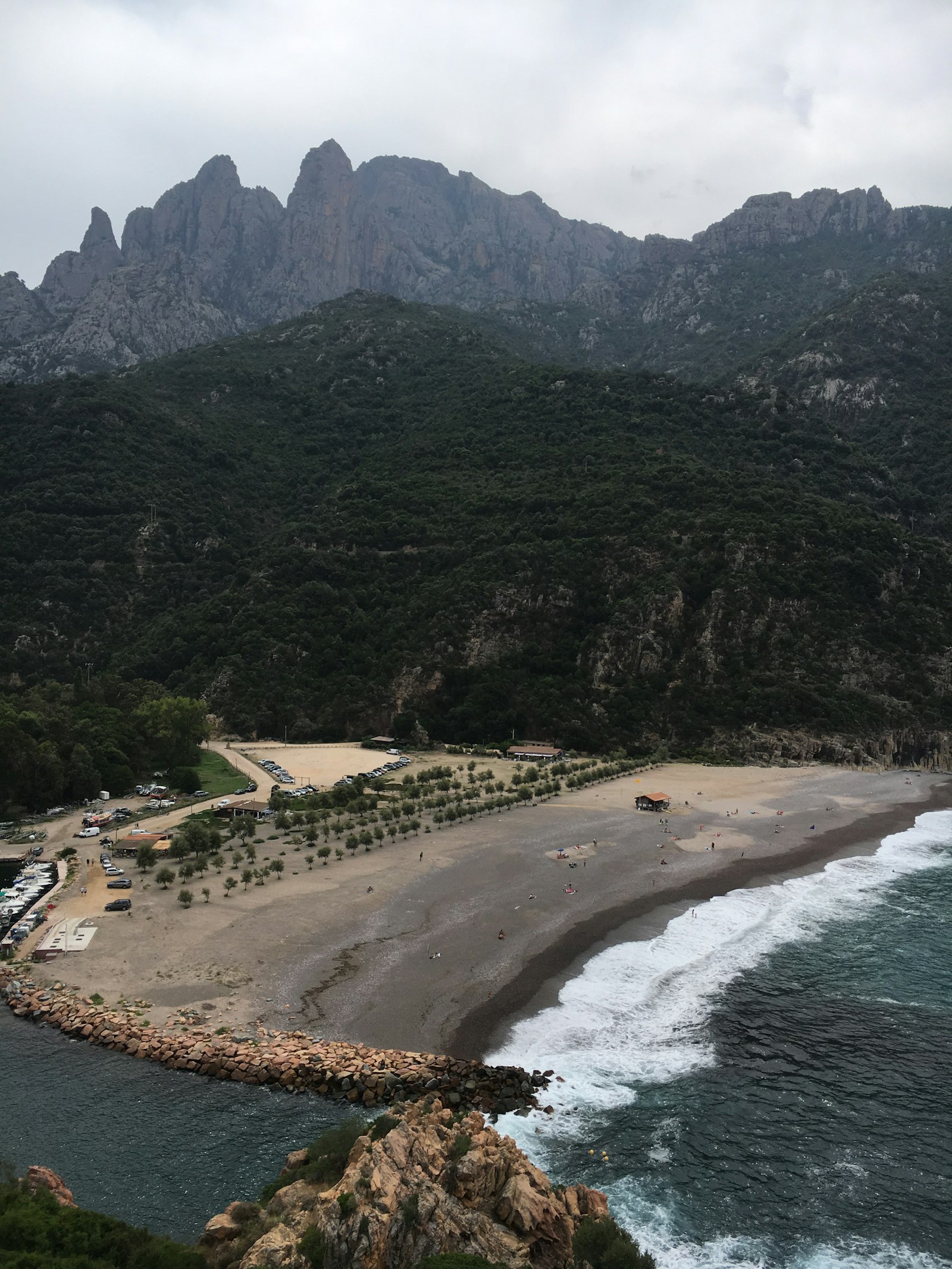
Climate, Nature and the Rhythm of the Year
Few European regions offer such climate variety within a two-hour drive. That diversity is one of the reasons buyers with different lifestyles all find their fit here.
A Mediterranean Climate with Alpine Accents
Along the coast, summers are warm and dry, averaging 28 to 30°C in July and August, while winters stay mild at 12 to 15°C during the day. Ajaccio enjoys close to 2,700 hours of sunshine per year, more than most of mainland France. Inland and at altitude, the picture changes: snow blankets the peaks from December through April, and ski stations like Ghisoni-Capanelle and Val d’Ese draw locals for weekend outings.
Protected Natural Spaces
Around 40% of the island is protected under the Parc Naturel Régional de Corse. Hikers know the GR 20, often ranked among Europe’s toughest and most spectacular long-distance trails. Divers head to the Scandola nature reserve; sailors cruise the Lavezzi archipelago; families discover the natural pools of the Cavu river.
→ Good to know
If you plan to live on the coast but want mountain escapes, aim for a home no more than 45 minutes from a ski access road. Areas around Corte and the Central Corsica valleys offer that dual lifestyle.
Weather, month by month
Average temperature and rainfall across the year (indicative climate normals, Ajaccio).
Economy, Demographics and Quality of Life
Corsica counts roughly 355,000 permanent residents, making it the least populated French region. That number swells dramatically each summer, when the island welcomes close to 3 million visitors. This ratio matters: it supports a strong seasonal economy while preserving the sense of space year-round.
Employment Basins and Local Economy
The Corsican economy is anchored by tourism (roughly 30% of GDP), agriculture and food production (wine, chestnuts, charcuterie, cheese, honey, olive oil), construction, and public services. The two main employment basins are:
- Ajaccio and the southwest: administration, port and airport activity, healthcare, retail, and a growing tech and services sector.
- Bastia and the northeast: logistics, shipping, agri-food, wine (Patrimonio), and cross-Mediterranean trade.
- Porto-Vecchio and the south: high-end tourism, hospitality, real estate services, and yachting.
- Calvi-Balagne: tourism, artisanal food production, and a strong second-home market.
Remote work has quietly reshaped the picture. A growing number of professionals now split their year between mainland offices and a Corsican base, particularly in Ajaccio, Bastia and Ile-Rousse, where fiber internet is widely available.
A Quality of Life That Speaks for Itself
What draws buyers here is rarely one factor. It is the sum of small things: fresh figatellu at the village fair, an autumn hike through chestnut forests, a swim on a beach you reach only by boat, a long dinner where nobody looks at their watch. The art de vivre is not a marketing line here; it is a daily practice.
Where is Corsica on the map?
Here is Corsica outlined on the map of France, one of the country’s 13 regions, each divided into several départements.
Accessibility: Closer Than You Think
One of the persistent myths about Corsica is that it is difficult to reach. In reality, connectivity has improved considerably.
Airports and Ferries
Corsica has four international airports: Ajaccio, Bastia, Calvi and Figari (serving Porto-Vecchio and the south). Direct flights connect the island to Paris, Nice, Marseille, Lyon, London, Brussels, Geneva, Rome, Milan and several other European hubs, especially from spring through autumn. Flight time from Paris is around 1h40.
Six ports (Ajaccio, Bastia, L’Ile-Rousse, Calvi, Porto-Vecchio and Propriano) handle daily ferries from Marseille, Toulon, Nice, Genoa, Livorno, Savona and Piombino. Crossings from the Italian coast can be as short as three to four hours, which makes bringing a car straightforward.
Getting Around and Cross-Border Links
There is no TGV on the island, but a scenic narrow-gauge train links Ajaccio, Corte, Bastia and Calvi, an experience in itself. Road infrastructure has been modernized, with the T20 and T22 axes serving as the main arteries. Sardinia is just a 50-minute ferry from Bonifacio, adding a natural extension to any life project here.
Cities, Villages and Where Buyers Look
Each corner of Corsica has its own character. Choosing the right area depends less on price alone and more on the rhythm you want.
Ajaccio and the West Coast
The capital combines Belle Époque architecture, a lively market, sandy beaches within the city, and a working port. It attracts buyers who want urban convenience without giving up the sea. Prices in central Ajaccio average around 3,800 to 4,500 euros per square meter, with premium seafront addresses climbing well beyond.
Porto-Vecchio and the South
The south is Corsica’s most sought-after zone for international buyers. Porto-Vecchio, its beaches (Palombaggia, Santa Giulia, Rondinara) and its hinterland villages command the highest prices on the island. Expect 5,500 to 8,000 euros per square meter in the town, and considerably more for villas with sea views or direct beach access, where transactions above 10,000 euros per square meter are not uncommon.
Bastia, Cap Corse and the Northeast
Bastia offers more accessible prices, around 2,500 to 3,500 euros per square meter, with genuine urban energy and easy ferry links to Italy. Cap Corse, the wild peninsula stretching north, is prized for its old maritime villages (Erbalunga, Centuri, Nonza) and remains a favorite for buyers seeking authenticity.
Calvi, Ile-Rousse and the Balagne
The Balagne combines postcard beaches, hilltop villages (Sant’Antonino, Pigna, Corbara) and a strong artistic tradition. Prices in Calvi range from 4,500 to 6,500 euros per square meter, with village stone houses in the hills often more accessible.
→ On the ground
Village stone houses (maisons de village) inland, within 20 minutes of the coast, often offer the best value: authentic architecture, cooler summers, and a real sense of community.
The Real Estate Market: Prices, Trends and Rental Yields
Corsica’s market is small, tightly held, and shaped by scarcity. Building permits are limited, coastal protection is strict, and many properties change hands within family networks. That structural tension between demand and available stock has supported steady price appreciation over recent years.
Price Ranges by Area
| Area | Average price €/m² | Indicative gross rental yield |
|---|---|---|
| Porto-Vecchio | 5,500 to 8,000 | 3 to 5% (seasonal) |
| Ajaccio | 3,800 to 4,500 | 4 to 6% |
| Calvi / Ile-Rousse | 4,500 to 6,500 | 3.5 to 5.5% (seasonal) |
| Bastia | 2,500 to 3,500 | 5 to 7% |
| Bonifacio | 6,000 to 9,000 | 3 to 5% (seasonal) |
| Inland villages | 1,500 to 3,000 | Variable |
How the Market Has Evolved
Over recent years, coastal Corsica has seen sustained price growth, particularly in the south, driven by international demand and a very limited stock. Inland areas have followed at a gentler pace, offering entry points for buyers focused on authenticity rather than beachfront. Renovation projects on stone bergeries (shepherd’s houses) and village homes remain a distinctive route into ownership.
Rental Yield Logic
Rental yields on the island are shaped by seasonality. The high season is short but intense: a well-located property in Porto-Vecchio or Calvi can generate the majority of its annual income across ten to twelve weeks. Bastia and Ajaccio, with year-round tenants, offer more stable numbers. Any rental project should be planned with local regulations in mind, particularly around short-term letting authorizations in tourist zones.
Culture, Customs and the Corsican Way
Buying in Corsica is not only a real estate decision; it is entering a culture that values discretion, hospitality and deep local roots. Understanding this matters.
Language, Music and Traditions
Corsican, a Romance language close to Tuscan Italian, is co-official with French and taught in schools. Polyphonic singing, listed by UNESCO, still fills churches and village squares. Feast days, chestnut fairs, olive oil festivals and religious processions punctuate the year, offering newcomers a natural way to meet neighbors.
Food, Wine and the Table
The Corsican table is generous and specific: brocciu cheese, coppa, lonzu, figatellu, chestnut flour, wild honey. The island counts nine AOP wine appellations, with Patrimonio, Ajaccio and Figari leading. Long shared meals, often outdoors, are a daily expression of the local art de vivre.
Five Reasons to Live in Corsica
If you are weighing your options across the Mediterranean, here are five reasons Corsica keeps drawing thoughtful international buyers.
- Unmatched natural diversity: sea, mountains, forests and rivers within a single day’s radius.
- Preserved authenticity: strict planning rules and a strong local identity keep the island from over-development.
- A genuine community: village life is real, not staged. Neighbors matter here.
- Solid connectivity: four airports, six ports and a short flight from major European cities.
- A tangible quality of life: fresh food, clean air, low pollution and one of the healthiest Mediterranean environments.
→ The key point
Corsica rewards buyers who take time to understand the island before choosing an area. A single scouting trip, well planned with a local advisor, saves months of hesitation.
Is Corsica Right for You? A Five-Question Quiz
Before starting a search, ask yourself these questions. Your answers give a clear reading of whether the island fits your life project.
Question 1: Your relationship with nature
Do you see yourself hiking, swimming or sailing at least once a week? Yes = strong fit. No = consider more urban Mediterranean options.
Question 2: Your rhythm
Are you comfortable with a slower pace, where shops close at lunchtime and Sundays are quiet? Yes = you will thrive. No = focus on Ajaccio or Bastia, the most urban options.
Question 3: Your travel needs
Do you need to be in a European capital in under three hours, door to door? Yes = plan near Ajaccio, Bastia or Figari airports. No = the whole island opens up.
Question 4: Your project horizon
Are you planning to hold the property for at least seven to ten years? Yes = market fundamentals work in your favor. No = reconsider timing.
Question 5: Your appetite for local culture
Are you curious about learning a few words of Corsican, attending village fairs, and building relationships with neighbors? Yes = you will be welcomed. No = the experience may feel incomplete.
Four or five “yes” answers? Corsica is very likely aligned with your life project. Two or three? A guided scouting trip will clarify things quickly.
Turning the Corsican Dream into a Concrete Project
Corsica rewards those who arrive with clarity. The island’s charm is real, but so are its specifics: strict coastal protection, seasonal market rhythms, local ownership traditions and the importance of the right notaire for the transaction. Navigating this from abroad, in a second language, is where hands-on guidance changes everything.
Our team lives and works in France. We handle every step of your purchase in English, from sourcing (including off-market properties through our trusted network) to the signing at the notaire, and onward into renovation, design and furnishing if you wish. The idea is simple: a turnkey path to your French home, run remotely, executed on the ground.
If Corsica speaks to you, whether you picture a stone village house in the Balagne, an apartment steps from an Ajaccio market, or a hillside villa above Porto-Vecchio, the next step is a conversation. Tell us about your life project, and we will help you read the market with the peace of mind that only real local craftsmanship and presence can offer.