





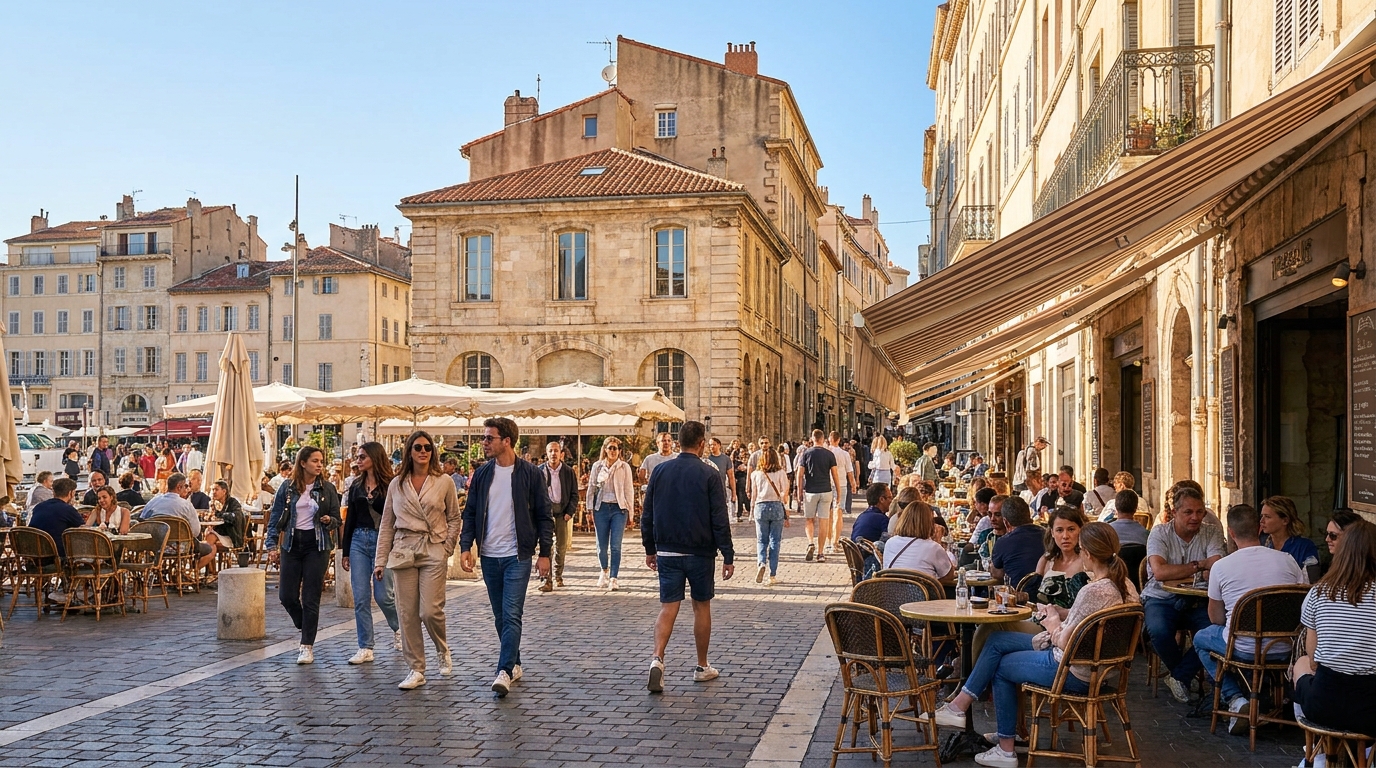

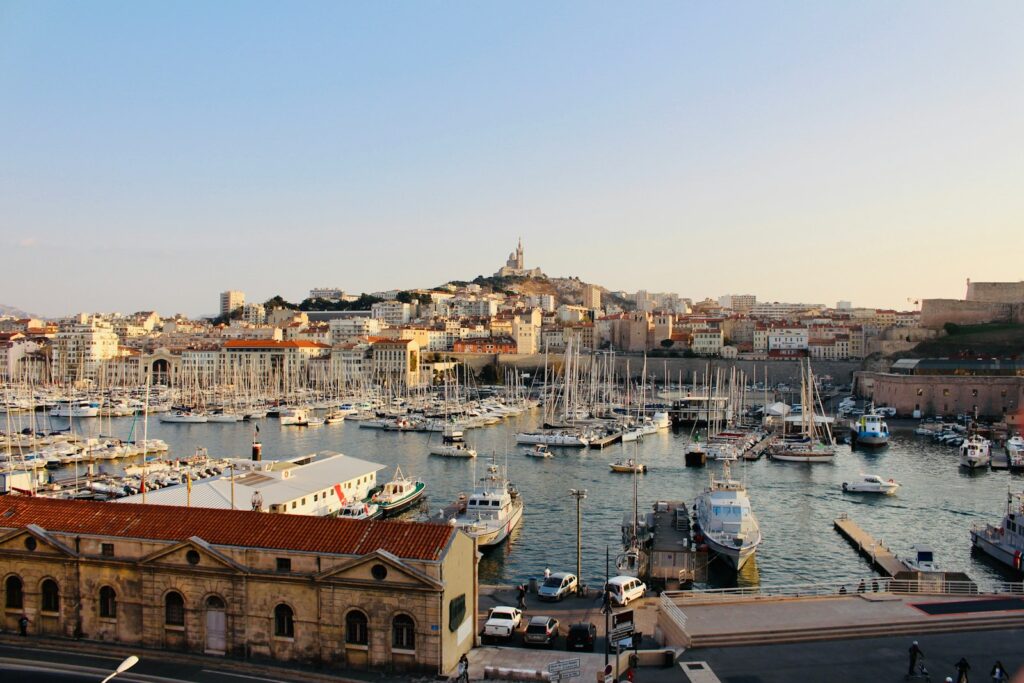
Marseille has a reputation that precedes it. Mention the city in London or New York and you often hear the same shorthand: sunny, southern, edgy. Yet ask anyone who has actually spent a season there, sipped a pastis on the Cours Julien, watched the fishermen unload at the Vieux-Port at dawn, and you get a very different picture. So the honest question, and one we hear constantly from clients weighing a life project on the Mediterranean, is simple: is Marseille safe?
The answer deserves more than a yes or no. It deserves neighborhood-level clarity, real numbers, and the perspective of a team that lives and works on the ground. That is what follows.
Understanding Marseille’s Reputation Versus Its Reality
Marseille is France’s second-largest city, roughly 870,000 residents, spread across 16 arrondissements (administrative districts) that feel more like a constellation of villages than a single urban block. Any conversation about safety has to start there, because Marseille is not one place; it is many.
What the numbers actually say
National statistics from the French Ministry of the Interior place Marseille in the same broad range as other large French metropolises for most everyday offenses: bike theft, phone snatching near tourist hubs, occasional car break-ins. Where the city stands apart in the headlines is organized crime tied to the drug trade, and this activity is highly localized in specific northern housing estates that most residents, and virtually all buyers, will never set foot in.
Recorded crime in Marseille, 2025
Marseille in four safety numbers
These are the offences actually recorded by the police in the commune of Marseille in 2025, set against the national average. Two things to keep in mind as you read them: they count crimes that were reported, not the ones nobody reports, and every rate is divided by the resident population, so a city with heavy visitor traffic scores higher on street theft than its residents alone would suggest.
Home burglaries
9.32per 1,000 homes
4,346 recorded in 2025
broadly stable since 2016
Theft without violence
19.32per 1,000 residents
17,122 recorded in 2025
broadly stable since 2016
Assault outside the home
5.03per 1,000 residents
4,454 recorded in 2025
up 18% since 2016
Vehicle theft
6.45per 1,000 residents
5,716 recorded in 2025
down 17% since 2016
Source: SSMSI, the statistics service of the French Ministry of the Interior, communal database of recorded crime (2025 data, published June 2026). Population and housing figures: INSEE (886,040 residents, 466,276 dwellings). Burglary is measured per 1,000 dwellings, the three other indicators per 1,000 residents.
For context, the neighborhoods where our clients typically buy (the 6th, 7th, 8th, and parts of the 1st, 2nd, and 5th) show crime patterns closer to those of Lyon or Nice.
The gap between perception and lived experience
Ask a resident of the 7th, walking home from the market at Place de la Corderie, whether they feel unsafe, and you will likely get a shrug and a smile. Marseille suffers from a media narrative that tends to compress the whole city into its most difficult pockets. The everyday reality, sunlit terraces, a working port, a serious cultural scene at MuCEM and La Friche, is far calmer than the clichés suggest.
How Safety in Marseille Has Evolved
The city has changed considerably over the past decade, and understanding that trajectory matters if you are thinking about settling there rather than just visiting.
Urban renewal and the Euroméditerranée project
The Euroméditerranée redevelopment, one of the largest urban renewal projects in southern Europe, has reshaped the entire arc from Joliette to Arenc. Old warehouses became museums, offices, and residential buildings. Street lighting, public transport, and pedestrian zones expanded. Neighborhoods once considered rough, like parts of the 2nd arrondissement around Le Panier, are now among the most sought-after for buyers looking for character properties with courtyards and rooftop terraces.
Increased police presence and community initiatives
Public investment in policing has grown, with additional national police units deployed and a strengthened municipal police force. Beyond enforcement, neighborhood associations, merchant collectives, and cultural programming have quietly done a lot of the heavy lifting: a lively street is a safer street, and Marseille’s café culture, weekly markets, and festivals keep the public space populated well into the evening.
→ On the ground
When you visit for the first time, plan an evening stroll through the neighborhood you are considering, not just a daytime viewing. The rhythm of a street after 8 p.m. tells you more than any statistic.
Property values and safety perception
A revealing indicator: property prices in central and southern Marseille have climbed steadily, with the 7th and 8th arrondissements now regularly transacting between 4,500 and 7,000 euros per square meter for quality apartments with sea views. Buyers, both French and international, are voting with their capital, and that shift tracks closely with improved perceptions of security.
Neighborhood by Neighborhood: Where to Live Comfortably
Rather than paint the city with a broad brush, here is how the areas most relevant to international buyers actually feel day to day.
The southern arrondissements (6th, 7th, 8th)
This is the Marseille of the postcards: the Corniche coastal road, the Prado beaches, Endoume, the Vallon des Auffes with its tiny fishing cabins. Family-friendly, well-served by public transport, dense with schools, bakeries, and small independent shops. Safety here is on par with the calmer arrondissements of Paris or the residential hills of Nice.
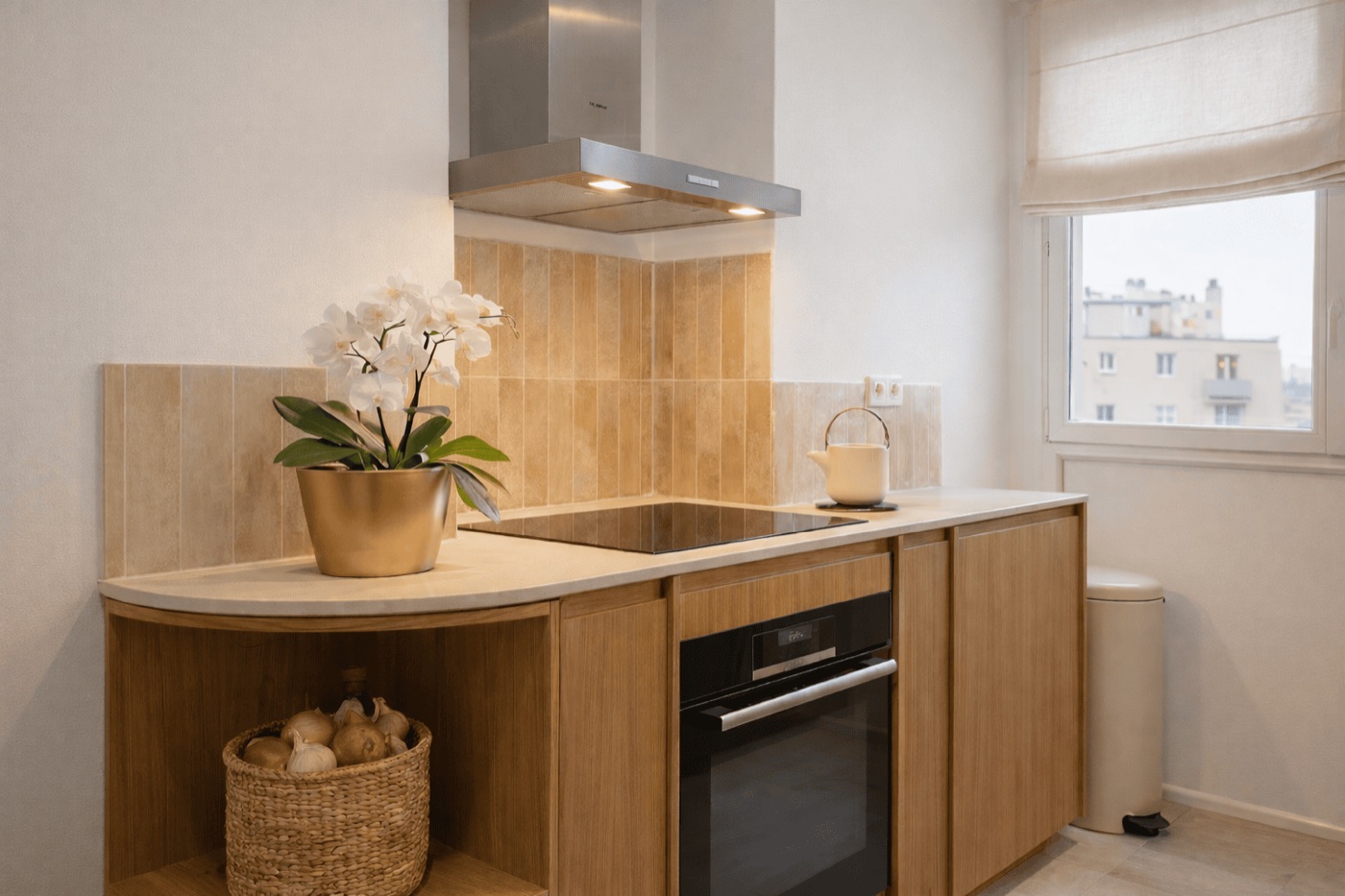
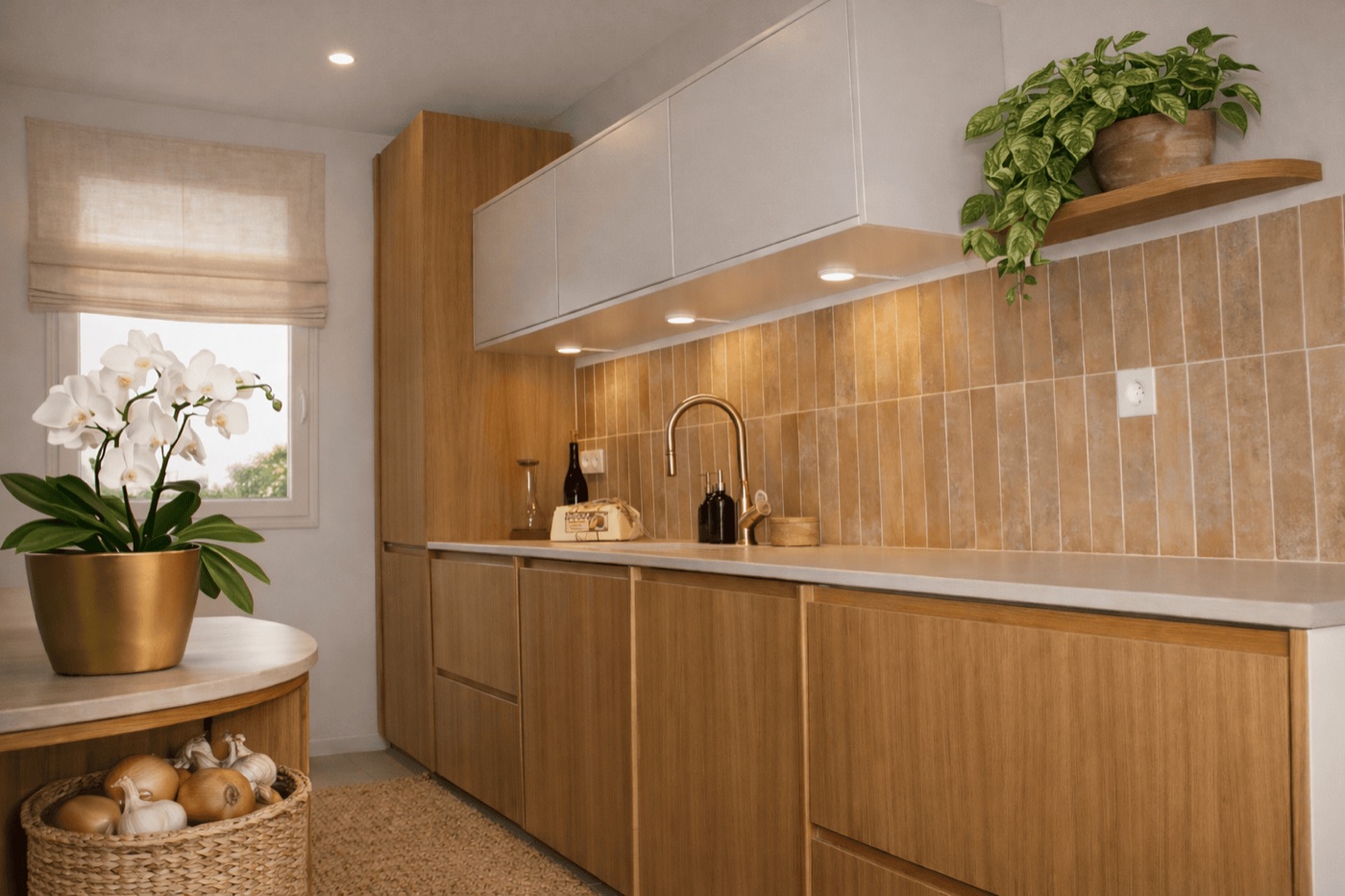
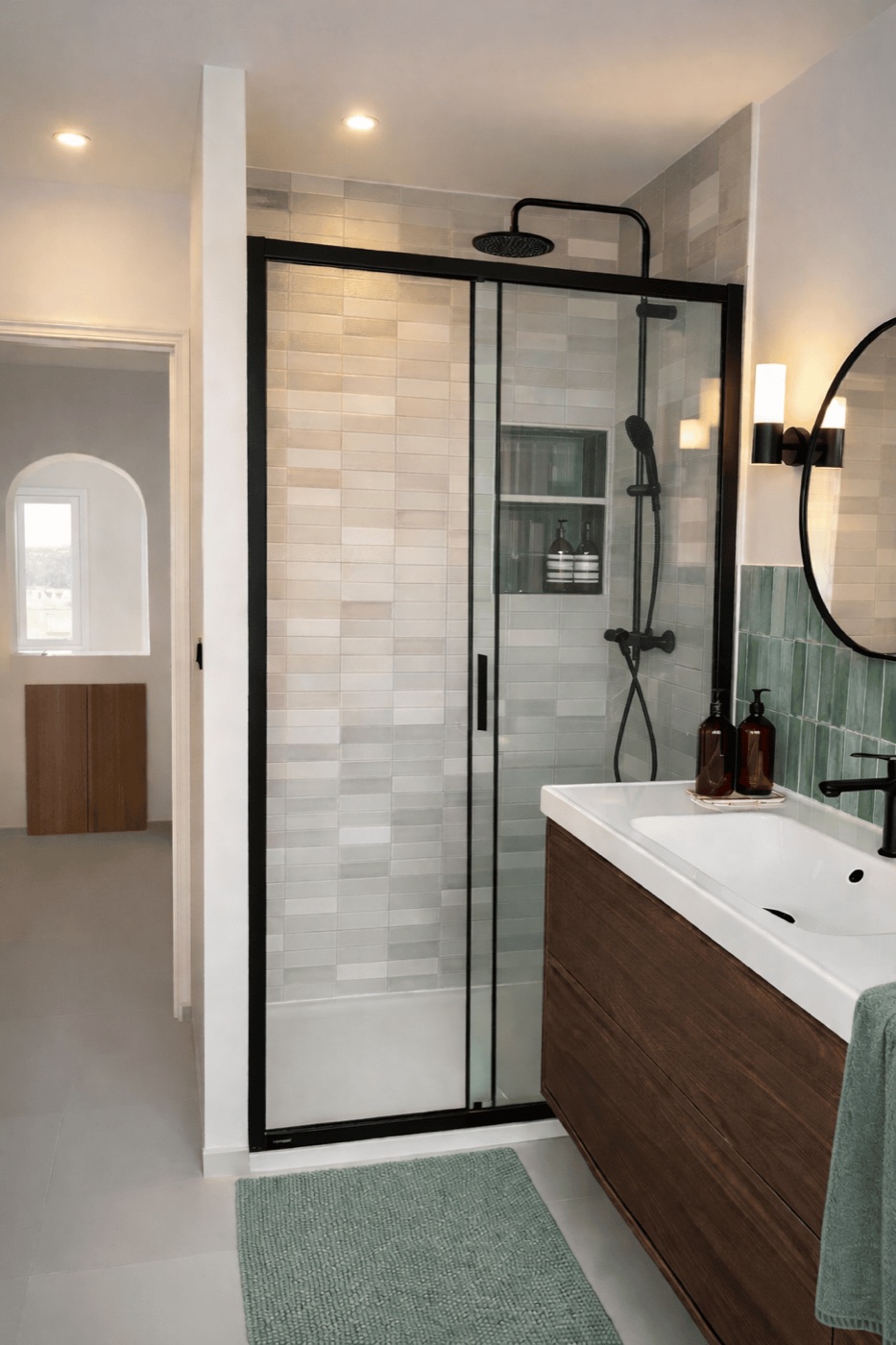
Our own renovation in the 7th arrondissement, delivered by the Ynspir studio. See the full project.
That is not an abstract recommendation. Our most recent Marseille project sits in exactly this part of the city: a full apartment renovation in the 7th, organised around a new kitchen and delivered by our Ynspir studio. Oak fronts, a pale stone worktop, glazed terracotta laid in a vertical stack, a shower room retiled floor to ceiling, and windows that look onto the rooftops rather than into a light well. It is also how the renovation figure reaches you before you commit rather than after: the architects who would run your works are the ones who price them, during the window when you can still walk away.
Le Panier and the historic core (2nd, 1st)
Le Panier is the oldest neighborhood in France, a maze of pastel façades above the Vieux-Port. It has transformed remarkably: artisan workshops, boutique hotels, restored townhouses. Petty theft can happen around the tourist crush of the port, as in any European hub, but the residential streets themselves feel intimate and lived-in.
Areas to approach with more care
The northern arrondissements (13th, 14th, 15th, 16th) contain the housing estates most often referenced in the news. These are not areas where you would typically buy or spend time as a resident, and a knowledgeable local advisor will steer you clearly. The point is not to demonize entire districts, but to be practical about where a life project belongs and where it does not.
A quick reference for buyers
- Excellent for family life: 7th, 8th, 12th (Saint-Barnabé area), Roucas Blanc
- Great for young professionals and creatives: 6th (Cours Julien, Notre-Dame-du-Mont), parts of the 5th
- Character and charm, walkable: Le Panier (2nd), Vauban (6th), Endoume (7th)
- Coastal calm: Les Goudes, La Madrague, Callelongue
Is Marseille Safe for Solo Travelers?
Traveling alone shapes how you read a city. You notice more. You calibrate more carefully. Marseille rewards that attentiveness rather than punishing it.
Everyday precautions that make a real difference
The main issues a solo visitor might encounter are opportunistic: a phone lifted from a café table, a bag left unattended on a beach, a distraction scam near the Vieux-Port. Standard urban common sense handles almost all of it. Keep valuables close on the metro line 1 during peak hours, avoid displaying expensive jewelry in crowded market streets, and use registered taxis or ride-share apps rather than unmarked cars at the train station.
Getting around confidently
The RTM public transport network (metro, tram, bus) is efficient and generally safe during service hours. Evening travel is comfortable on well-trafficked lines. For late nights, a taxi from a stand or a booked ride is the simple move. Walking home through Cours Julien or the Prado on a Friday evening is a pleasant, well-populated experience, not a nerve-wracking one.
Is Marseille Safe for Female Travelers and Residents?
This is one of the most common questions we receive, and it deserves a candid answer rather than a reassuring platitude.
Day-to-day experience
Women living in Marseille consistently describe the city as vibrant and workable. Street harassment exists, as in most Mediterranean cities, and it tends to concentrate in specific transit hubs or nightlife zones late at night. In residential districts, at the market, on the tram, in your quartier café, the experience is largely uneventful and often warm; Marseillais are famously talkative and welcoming.
Practical habits shared by long-term female residents
Women who have made Marseille home tend to converge on a few habits: choose an apartment on a lived-in street rather than an isolated block, get to know your local baker and pharmacist (they become informal anchors), and use the excellent café culture as your default evening setting. The city rewards those who plant roots in a neighborhood.
→ Good to know
Buildings with a functioning digicode (entry code) and a well-maintained lobby, common in the 6th, 7th, and 8th, add a meaningful layer of comfort for anyone living alone.
Is Marseille Safe for Families Settling In?
Families make up a growing share of our clients, and their questions run deeper than headline safety. They want to know about schools, parks, pediatricians, weekend rhythms. Marseille handles all of it beautifully.
Schools and daily life
The city offers a strong network of public schools, several bilingual and international options (including the International School of Provence and EIB Marseille), and easy access to private establishments. Enrollment is straightforward for residents, and the school day rhythm, with a proper lunch break, integrates children into French life quickly.
Parks, beaches, and the outdoors as a way of life
Few European cities offer this much outdoor living within city limits. Parc Borély, the beaches at Prado, the Calanques National Park accessible directly by bus or boat, and the small coves of the 8th arrondissement give families a rare quality of life. Weekends are spent outside, which is both a joy and, in its own way, a form of safety: a city that lives outdoors is a city that watches over itself.
Comparing lifestyle scenarios
| Buyer profile | Recommended areas | Indicative budget (apartment) |
|---|---|---|
| Family, primary residence | 7th, 8th, Roucas Blanc, Saint-Barnabé | 450,000 to 900,000 € |
| Second home, sea view | Endoume, Vauban, Corniche | 550,000 to 1,500,000 € |
| Pied-à-terre with character | Le Panier, Cours Julien | 280,000 to 550,000 € |
| Coastal retreat | Les Goudes, Callelongue | 600,000 to 1,800,000 € |
Buying with Clarity: Turning a Question of Safety into a Life Project
The safety question, when you dig into it, is really a question about fit. Which neighborhood matches your family rhythm? Which street will feel like home? Which building offers the calm you want after a day at the beach? These are the questions a good local advisor helps you answer.
What a hands-on team brings
Reading Marseille from abroad is genuinely difficult. Two streets apart can mean two different worlds, and no algorithm captures that nuance. Our role is to walk those streets with you (in person or by video), share honest feedback on each address, coordinate with the notaire (the public officer who handles property transfers), and manage the compromise (compromis de vente, the binding preliminary sales agreement) through to signing. The result is peace of mind and a purchase you understand fully.
The steps of a purchase, at a glance
- Initial consultation to define your life project, budget, and priorities
- Curated shortlist based on neighborhood fit, safety, and property condition
- On-the-ground visits with detailed reports and video walkthroughs
- Negotiation, offer, and coordination with the notaire
- Signing of the compromis de vente, then the final deed roughly two to three months later
- Renovation, design, and furnishing handled turnkey if desired
→ The key point
Safety in Marseille is a question of address, not of city. The right street, chosen with local guidance, changes everything.
A City That Rewards Those Who Know It
Marseille is not a city you consume in a weekend. It is one you settle into, learn the codes of, and eventually love with the kind of attachment that only unpolished, layered places generate. The safety question, asked honestly, has an honest answer: the neighborhoods where you would actually live are safe, walkable, and full of the small daily pleasures that define the French art de vivre.
What matters most is choosing your address with clarity. That is where a real relationship with a team on the ground makes all the difference, whether you are dreaming of a whitewashed apartment above the port, a family home near the Prado, or a stone cabin above the calanques. Your French home is a life project, and it deserves guidance that reads the city the way locals do.
If you are ready to explore what Marseille could look like for you, our buyer’s agent team is here to walk you through the neighborhoods, the numbers, and the practical steps. The city is waiting; the right address is the one you will find together.